How do you stop being an emotional eater? For me the answer was simple: accept it and choose foods that are delicious, nourishing, and make me feel good. I’m an emotional eater and I’ve learned to lean into that love of food by preparing meals that satisfy both taste and health.
Food has always energized me. Whether I’m sad, happy, stressed, or bored, a thoughtful plate can shift my mood. In the past that looked like mindless snacking on junk, which led to guilt and discomfort. Over time I discovered that healthy food can be every bit as comforting and joyful as processed snacks—sometimes more so, because it leaves me feeling physically well too.
I now seek dishes that balance flavor, texture, and nourishment. I’ll happily substitute a box of cookies with a few dried figs and nuts; the taste satisfies and the nutrients do not leave me feeling guilty. Being an emotional eater isn’t something to be ashamed of unless it causes harm. If you can find satisfying, wholesome foods that make you feel good, emotional eating can coexist with a healthy lifestyle.
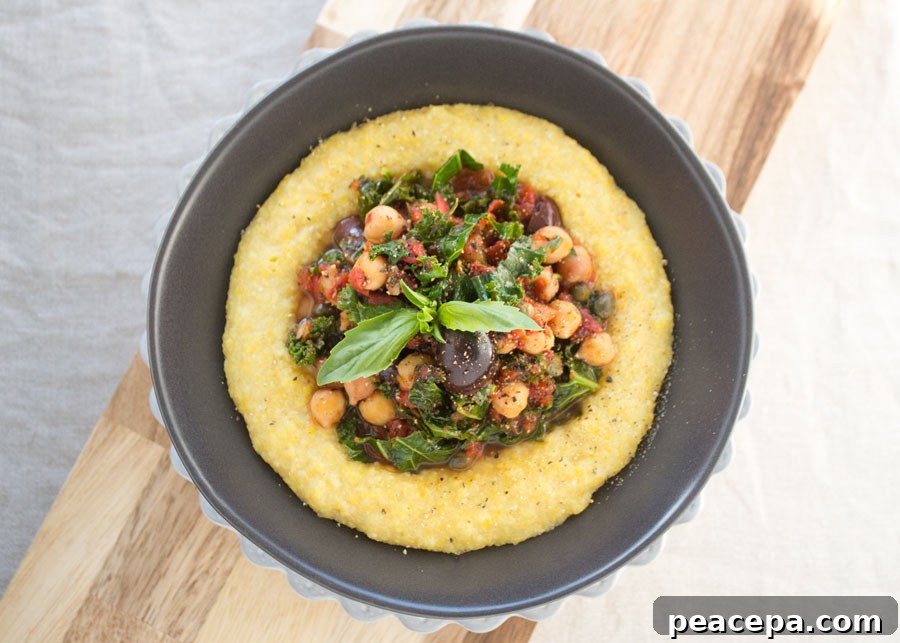
My main emotion around food is love. That’s why I’m excited to share my current favorite: kale puttanesca with creamy vegan polenta. On a comfort scale, this rates a perfect 10. The polenta is silky and savory thanks to nutritional yeast; the puttanesca is bold—salty, herby, and richly textured. It’s tomato-forward, which I adore, and it brings to mind cozy, homey pasta dishes I grew up with, but in a lighter, plant-based form.
Writing about it already makes me smile. As Julia Child said, “People who love to eat are always the best people.” If you delight in food, you’re in good company.
Are you a happy emotional eater? What foods light you up?
Kale Puttanesca & Creamy Vegan Polenta
Ingredients
Puttanesca
- 2 tbsp grapeseed oil or olive oil
- 3 cloves garlic, minced
- 1/2 cup dry white wine
- 24 oz can diced tomatoes (fire-roasted recommended)
- 1/3 cup pitted kalamata olives, halved
- 1/4 cup capers
- 1 cup cooked chickpeas or cannellini beans
- 1 tsp dry sage
- 1 tsp fennel seeds
- 1 tsp dried oregano
- 1/2 tsp dried thyme
- 1/2 tsp chili flakes
- 5 cups kale, chopped and loosely packed
- 3 tbsp fresh tarragon, chopped
- 6 basil leaves, chopped
Polenta
- 3 cups water
- scant teaspoon sea salt
- 3/4 cup polenta
- 1/4 cup nutritional yeast
- 1 tbsp olive oil
Instructions
Puttanesca
- In a dutch oven or heavy-bottomed pot, heat the oil over medium heat.
- Add the garlic and sauté until lightly golden.
- Add the wine and simmer for about a minute to let the alcohol cook off.
- Stir in the diced tomatoes, olives, capers, beans, sage, fennel, oregano, thyme, chili flakes, and kale.
- Bring the mixture to a simmer, then reduce the heat and let it cook gently so the flavors meld.
- When ready to serve, stir in the chopped tarragon and basil, adjust seasoning to taste, and keep warm.
Polenta
- Bring 3 cups of water and a scant teaspoon of sea salt to a boil.
- Slowly pour in the polenta while whisking or stirring, then reduce heat to medium-low. Stir continuously to prevent clumping; if it pops, lower the heat further.
- Keep stirring until the polenta thickens to a porridge-like consistency, about 20 minutes total. Watch it closely to avoid sticking or burning.
- When thickened, stir in the nutritional yeast and olive oil. Cook for another minute, then remove from heat and season to taste.
- Serve the puttanesca spooned over the creamy polenta. Garnish with fresh black pepper and extra basil if desired.