
Not all Buddha bowls are created equal. This Korean-inspired vegan Buddha bowl combines bold flavors, satisfying textures, and nourishing ingredients to create a bright, balanced meal you’ll want to make again and again. Ready your fork—this bowl is worth the hype.
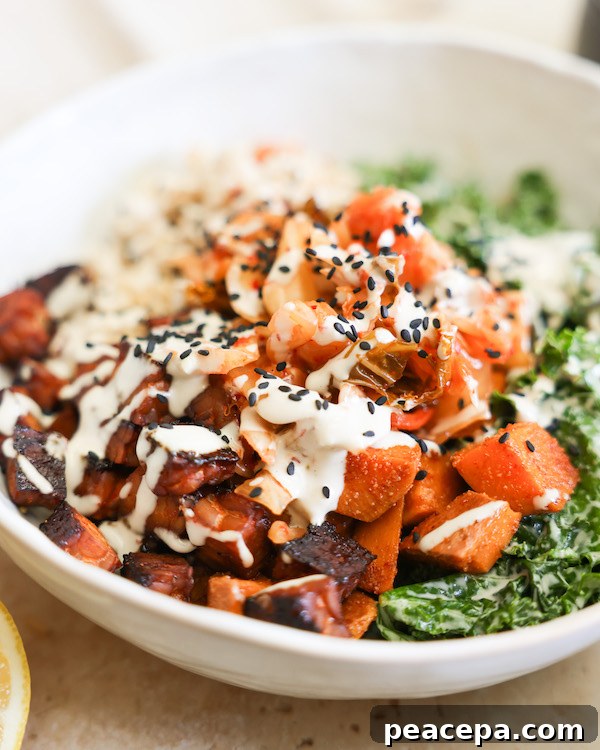
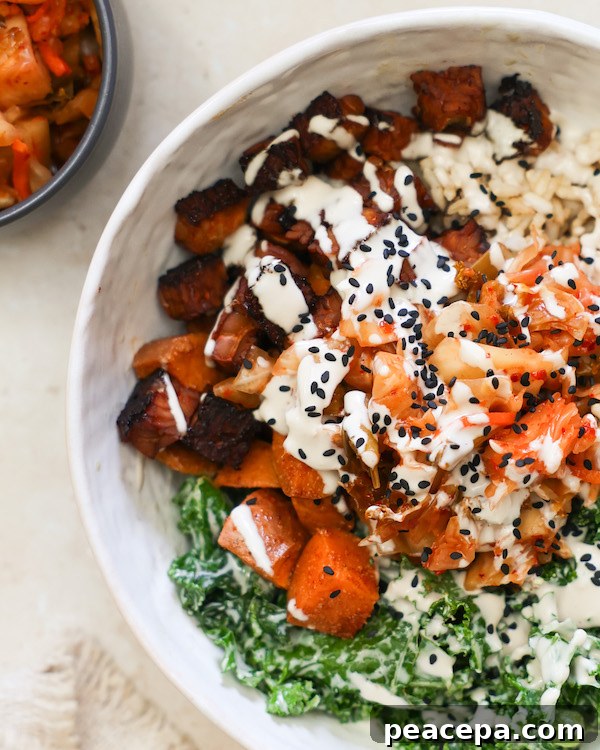
If I had to pick one dish to eat every day, this Buddha bowl would be near the top of the list. Buddha bowls can be beautiful, but some fall short on flavor. This Korean-inspired version is full of personality: roasted sweet potatoes for sweetness and earthiness, gochujang-marinated tempeh for umami and heat, massaged kale dressed in tahini for tenderness, and kimchi for tang and crunch. A sprinkle of sesame seeds finishes the bowl with a satisfying toastiness. The result is a colorful, protein-rich meal that’s both nourishing and delicious.
Why We Love It
- Balanced and healthy
- Bold, layered flavors
- Excellent for meal prep
- Simple, wholesome ingredients
- High in protein and fiber
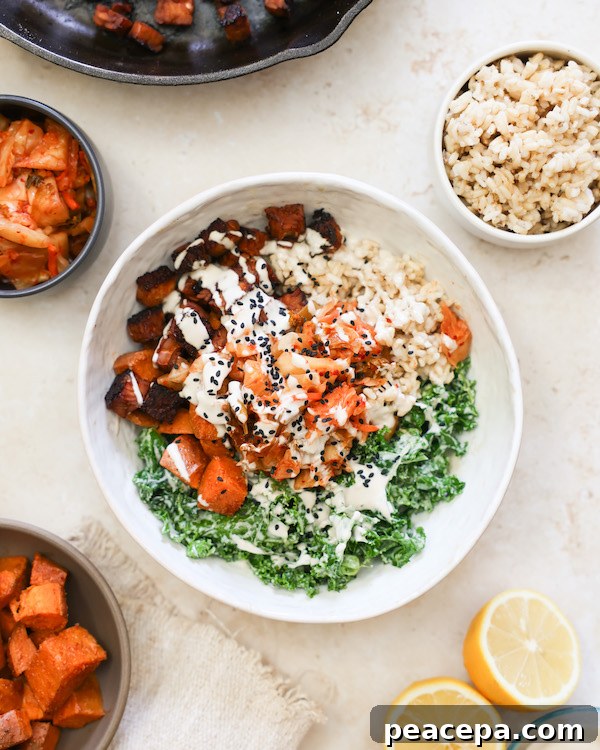
What is a Buddha Bowl
A Buddha bowl is a composed meal of whole grains, vegetables, legumes or soy protein, and a healthy fat, often inspired by macrobiotic ideas of balanced eating. While I don’t follow the macrobiotic rules strictly, I love the structure: components that together provide texture, flavor, and nutrition.
The 5 key components of a Buddha bowl are:
1. WHOLE GRAIN: brown rice, quinoa, millet, farro, etc.
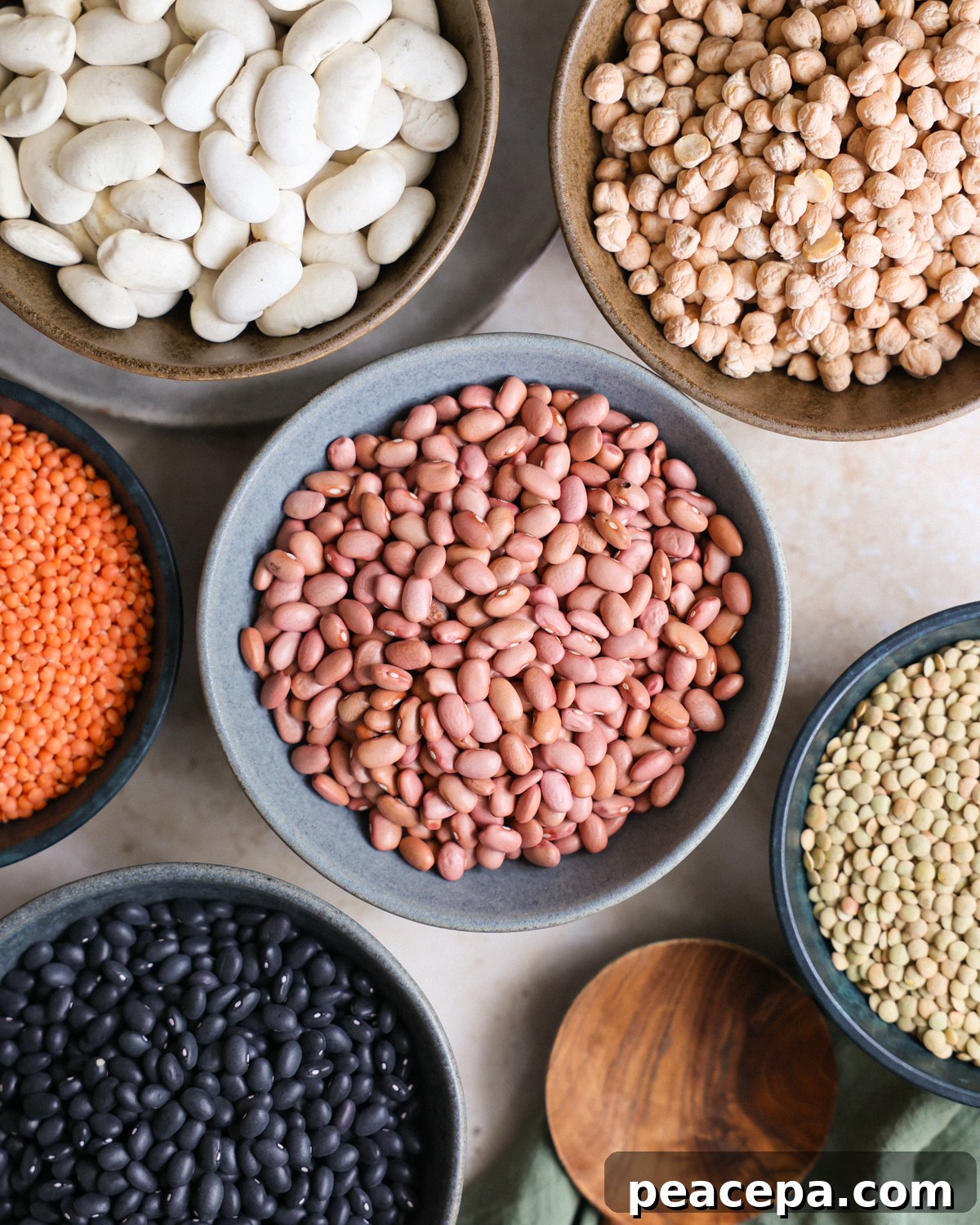
2. LEGUME / PROTEIN: tofu, tempeh, beans, lentils, roasted chickpeas.
3. STARCHY VEGETABLE: sweet potato, squash, pumpkin.
4. GREEN VEGETABLE: kale, spinach, broccoli, cauliflower.
5. HEALTHY FAT: avocado, tahini, nuts, seeds, nut butter.
Common grains for bowls are brown rice and quinoa. The legume or protein can be beans, lentils, or soy products like tempeh. I favor sweet potato for the starchy element and tahini or avocado for a creamy finishing touch. Buddha bowls are colorful and flexible—great for mixing and matching leftovers or preparing components ahead for quick assembly during the week.
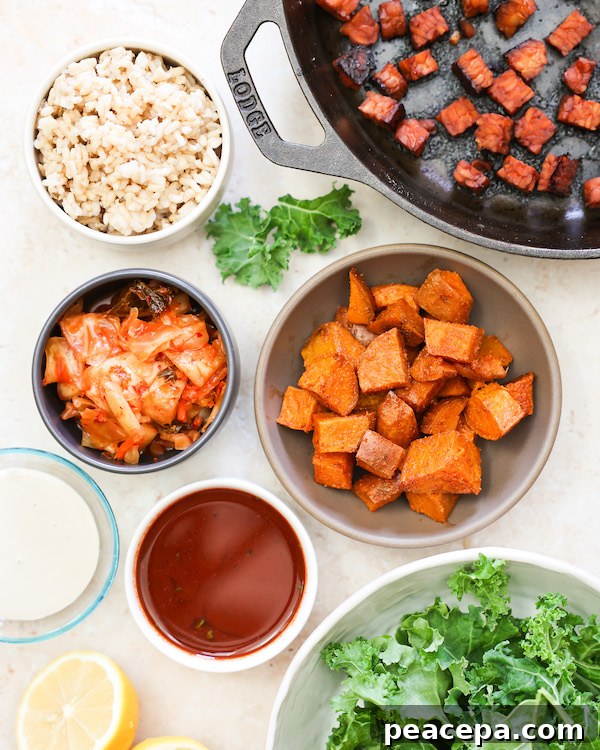
The Star Ingredients
This version leans on Korean flavors: gochujang gives the tempeh depth and spice, kimchi adds bright fermented tang, and tahini rounds everything out with creaminess. Below are the key components and why they work.
Gochujang paste
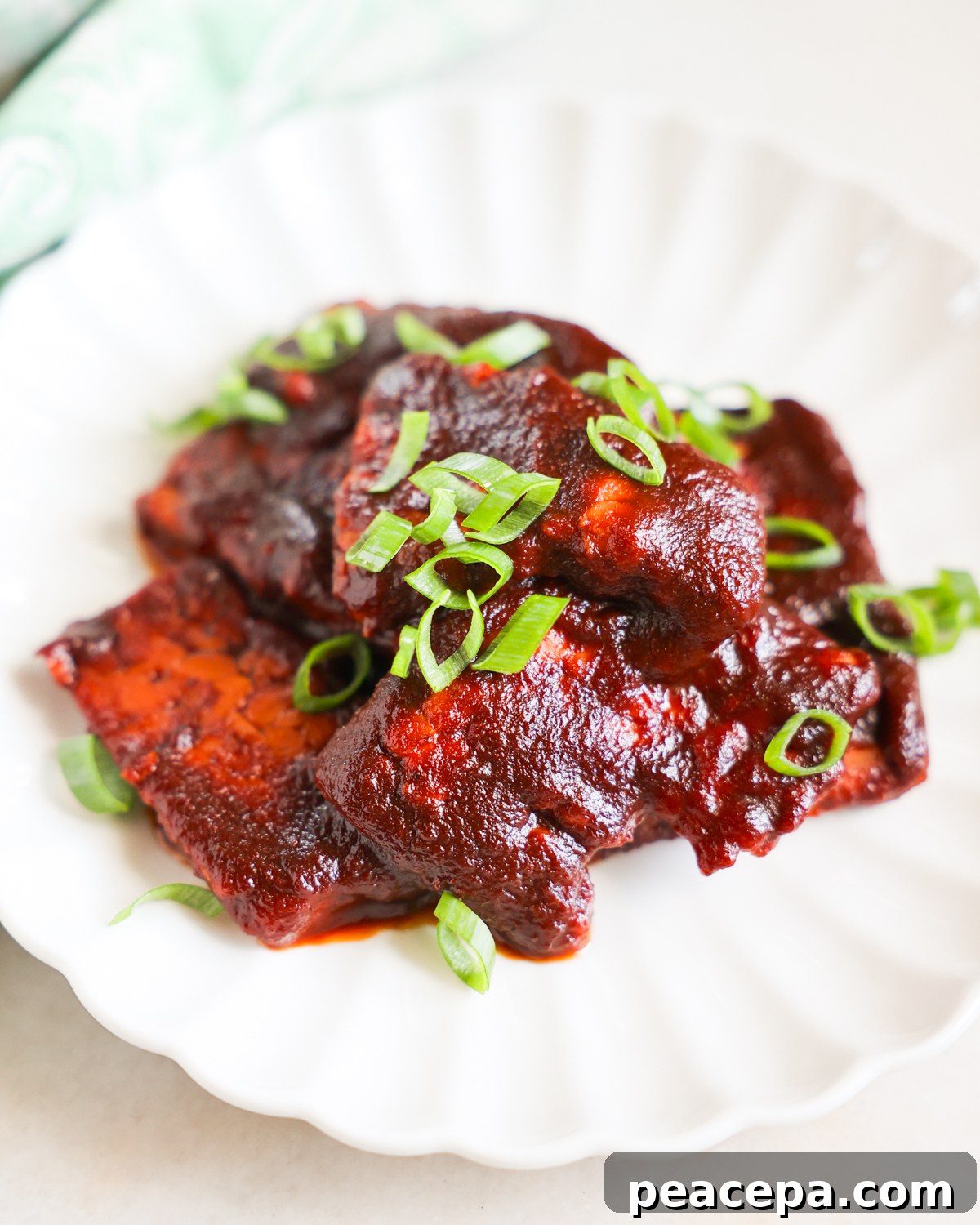
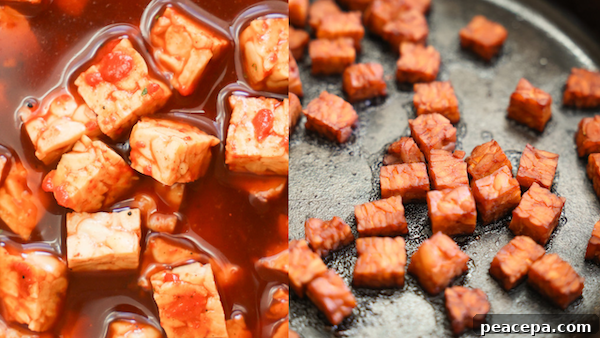
Gochujang is a fermented Korean red pepper paste with sweet, savory, and spicy notes. For this recipe it’s combined with soy sauce, balsamic vinegar, and maple syrup to make a silky marinade for tempeh. Marinate at least four hours, preferably overnight. Choose a spiciness level you enjoy and check labels if you need a vegan option.
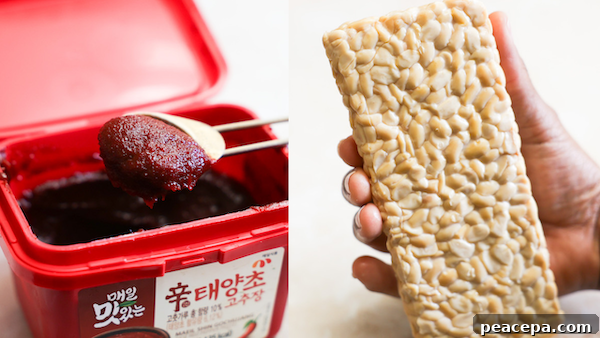
Tempeh
Tempeh is a fermented soy cake with a firm, dense texture that holds up well to marinades and roasting. It’s a great plant-based protein source—about 18 grams per serving—and develops a pleasantly chewy, meaty bite when baked.
Kimchi
Kimchi is spicy fermented cabbage with a tangy crunch. If you enjoy sauerkraut or pickles, you’ll likely love kimchi. It adds texture, acidity, and probiotic benefits. Check labels for seafood ingredients—vegan kimchi is widely available at Asian markets and health food stores.
Kale
Kale provides the green element. Massaging it with tahini-based dressing softens the leaves, making them more tender and easier to digest while enhancing flavor absorption.
Tahini
Tahini is sesame seed paste that creates a creamy, nutty sauce and supplies healthy fats and calcium. A few tablespoons go a long way to tie the bowl together.
Sweet Potato
Roasted sweet potatoes bring natural sweetness, color, and nutrients like beta-carotene, vitamin C, and fiber. You can use orange or purple/white-fleshed varieties—Korean sweet potatoes tend to be drier and starchier, while orange varieties are creamier. Both are delicious.
Tips for a Better Bowl
- Marinate tempeh overnight for the best flavor.
- Use tamari or shoyu for a richer soy flavor; tamari is a good gluten-free option.
- Reserve the leftover tempeh marinade to drizzle over the finished bowls.
- Double the tempeh batch if you want leftovers for several meals.
- Don’t heat kimchi—add it to warm bowls just before serving to preserve probiotics.
- Cook strategically: roast tempeh and sweet potatoes together while the rice cooks, then make the tahini sauce and massage the kale while things finish.
Swaps
Buddha bowls are highly adaptable. Swap ingredients within each category: red cabbage for kale, kabocha or butternut squash for sweet potato, roasted pumpkin seeds for sesame seeds, or avocado in place of tahini. If you prefer tofu to tempeh, use the same marinade and roast it the same way.
How to store a buddha bowl
Store components separately in airtight containers in the refrigerator for best texture and freshness. Keep kimchi separate and add it to bowls only when serving or reheating leftovers.
More vegan bowl recipes
Better-than-Chipotle Vegan Burrito Bowl
Buddha Bowl Meal Plan
Southern Buddha Bowl
Balanced Maple Mustard Tempeh Bowl
I’ve been making this vegan Buddha bowl for years, and it remains a staple. It’s simple to prep, travels well for lunches, and keeps beautifully in the fridge when components are stored separately. If you enjoy bold, balanced flavors and easy meal prep, this bowl will quickly become a go-to recipe.

Korean-Inspired Vegan Buddha Bowl
Video
Ingredients
Marinated Tempeh
- 1 block tempeh, cut into cubes
- 3 tbsp soy sauce
- 3 tbsp balsamic vinegar
- 2 tbsp gochujang paste
- 1 tbsp maple syrup
Sweet potatoes
- 3 sweet potatoes, assorted varieties
- 1 tbsp neutral oil
- 1/2 tsp garlic powder
- 1/2 tsp smoked paprika
- 1/2 tsp sea salt
Tahini Sauce & Bowl Ingredients
- 1/4 cup tahini
- 1 small garlic clove, minced
- 2–4 tbsp fresh lemon juice
- 1/4 cup water + more to thin
- 8 cups raw kale
- 4 cups cooked brown rice
- 2 cups vegan kimchi
- 4 tsp black or white sesame seeds
- 2 tbsp fresh chives or scallion
Instructions
Marinated tempeh
- Combine soy sauce, balsamic vinegar, gochujang, and maple syrup in a bowl. Whisk or stir until smooth.
- Add cubed tempeh, toss to coat, cover, and refrigerate for at least 4 hours or overnight.
- Preheat the oven to 375°F. Transfer marinated tempeh to an oven-safe dish and roast about 20 minutes alongside the sweet potatoes.
Sweet potatoes
- Toss cubed sweet potatoes with oil, garlic powder, smoked paprika, and salt. Roast for 40–45 minutes, until tender and fragrant.
Tahini sauce
- Combine tahini, garlic, lemon juice, and water in a bowl or jar. Stir or shake well. Add water 2 tbsp at a time to reach desired consistency.
Assemble the Buddha bowl
- Massage kale with a few tablespoons of tahini sauce and a pinch of salt until tender. Do this in the serving bowls or in a large mixing bowl if making several bowls.
- Build each bowl with a scoop of brown rice, roasted tempeh, and sweet potatoes. Top with kimchi, a drizzle of tahini sauce, sesame seeds, and chives or scallion.
Notes
Marinate tempeh overnight for deeper flavor. Save leftover marinade to drizzle over finished bowls. Cook brown rice according to package instructions—an Instant Pot method is 1 cup rice + 1 1/4 cups water, pressure cook 24 minutes, natural release 10 minutes.
Nutrition
Like this recipe? Rate and comment below!