As a food blogger and former vegan private chef, I’ve finally had the chance to visit places I never did when I worked full time in kitchens. Last week I took a day trip to the Hudson River Valley’s Black Dirt region to visit Minkus Family Farms, a family-run onion farm. The drive and the farm scenery were beautiful, and I learned a lot about how successful onion farming works.
Minkus Family Farms is participating in a New York State program that certifies farmers who use eco-friendly and food-safe practices: Empire State NY Grown & Certified. This voluntary program highlights growers who follow sustainable and safe methods. I joined other local bloggers to help raise awareness about the benefits of shopping local: it supports local economies, reduces environmental impact because produce travels shorter distances, and often means fresher, higher-quality produce. If you live in New York, look for the NY Certified label on fresh produce at grocery stores and farmers’ markets beginning in Spring 2017.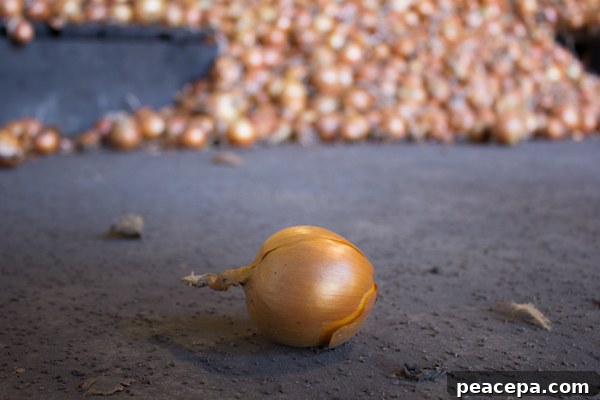
We visited after harvest season — harvest is typically in August — so we didn’t pick onions in the field. Still, onions were everywhere: stacked in crates and stored in a huge temperature- and humidity-controlled warehouse that keeps them fresh for months. I’ve never seen so many onions packed in one place!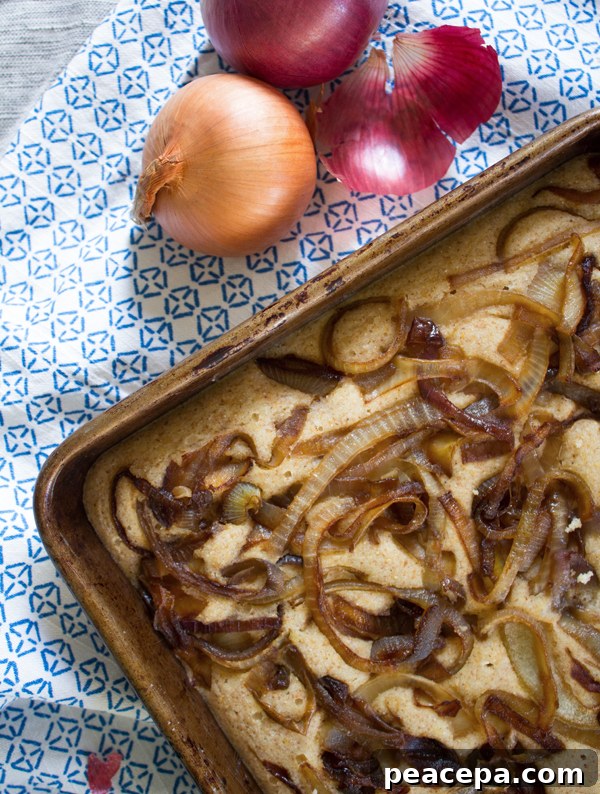
The inside scoop
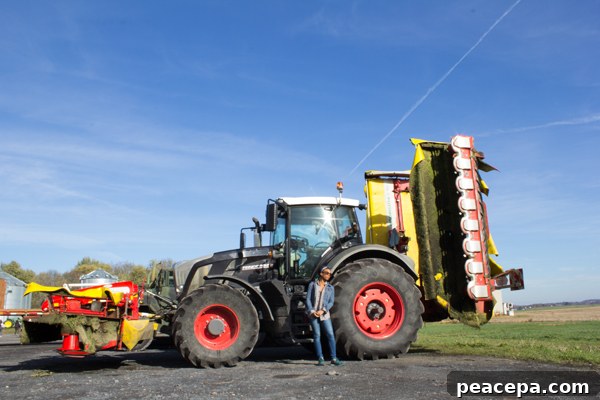
Rick Minkus, who founded the farm nearly 25 years ago, showed us around and shared his knowledge. The farm employs about 55 people, including family members. Outside we found crates full of onions ready for storage. Rick taught us how to choose a good onion: the papery stem—or neck—should be dry; any residual moisture can be a sign of poor storage or spoilage. A good onion should also feel firm all around.
Visiting the farm reminded me how valuable it is to see where our food comes from. It deepens appreciation for the produce and the people who grow and harvest it. I’m already looking forward to my next farm visit.
How to caramelize onions
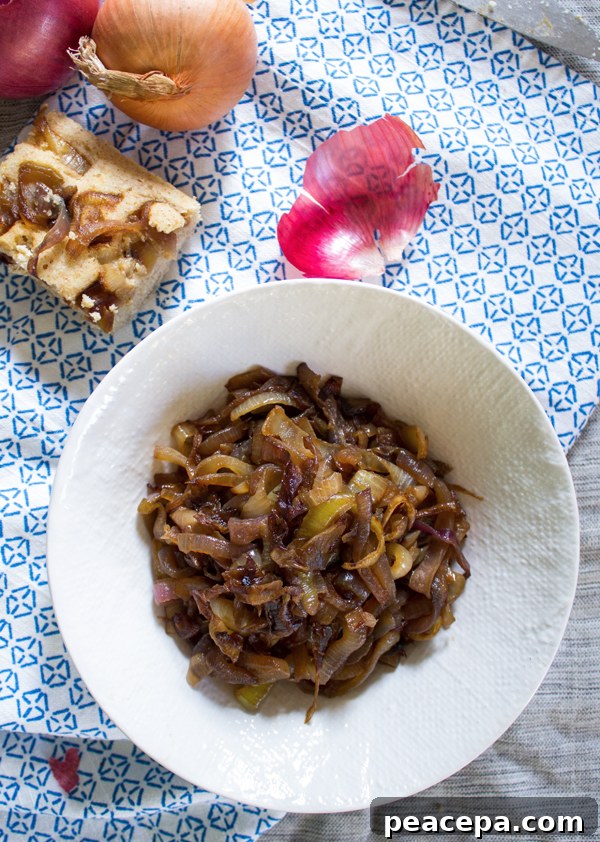
Caramelizing onions takes patience and the right temperature. Start with good-quality onions, slice them evenly, and cook slowly so they soften and develop a sweet, rich flavor without burning. Below is a concise, reliable method for caramelizing onions and a cornbread recipe that pairs beautifully with them.
This is a sponsored conversation written on behalf of Empire State Development. The opinions and text are my own.
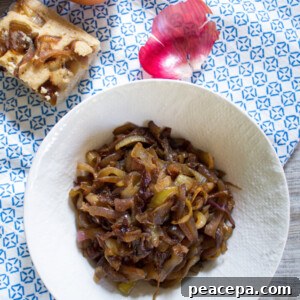
How to Caramelize Onions + Caramelized Onion Cornbread
Ingredients
Caramelized Onions
- 2 lbs yellow and/or red onions
- 1/2 tsp sea salt or kosher salt
- 2 tbsp oil
Vegan Cornbread
- 1 3/4 cup cornmeal, fine ground
- 1/2 cup flour
- 1 1/2 tsp baking powder
- 1/2 tsp baking soda
- 2 tsp salt
- 2 tbsp sugar
- 2 tbsp flax meal
- 6 tbsp water
- 1 1/2 cup soy milk or other non-dairy milk
- 1 tsp apple cider vinegar or white vinegar
- 1/4 cup oil (grapeseed recommended)
- 1/2–1 cup caramelized onions
Instructions
Caramelized Onions
- Warm the oil in a large cast iron or heavy skillet over medium-high heat.
- Add the sliced onions, stir to separate, and spread into an even layer.
- Add the salt and stir to combine.
- Reduce heat to medium and cook until the onions begin to turn translucent.
- Stir again, then lower the heat to medium-low for about 5 minutes, then reduce to low (not the lowest setting).
- Cook for about 30 minutes, stirring occasionally to prevent sticking or burning.
- Continue cooking on low until the onions reach your desired color and texture — soft, browned, and sweet but not burned.
- Optional: add 1 tbsp sugar for sweeter onions, or 1 tbsp vinegar to add tang and deglaze the skillet.
Cornbread
- Combine the dry ingredients in a medium bowl and mix well.
- In another bowl, mix flax meal and water and let sit for at least 5 minutes until thickened.
- Add the remaining wet ingredients to the flax mixture and whisk to combine.
- Pour the wet ingredients into the dry and stir until just combined; avoid overmixing.
- Pour the batter into a 9×9 or 8×8 baking dish and spread the caramelized onions over the top.
- Bake at 350°F (175°C) for 20–25 minutes, or until golden and a toothpick inserted in the center comes out clean or with a few crumbs.