I’ve written this post as a paid ambassador for Megafood. All thoughts and opinions are my own. This blog post contains affiliate links.
Readers often ask how to maintain healthy iron levels on a vegan diet. Iron deficiency affects a notable portion of American women—CDC data indicates roughly 10%—so concern about iron after eliminating animal products is understandable. Even people who consume meat can experience low iron, fatigue, and reduced energy, which shows that iron intake alone isn’t the whole story.
Iron absorption depends on more than the amount consumed. It requires supportive nutrients such as vitamin C and an overall nutrient-dense diet to be effectively absorbed into the bloodstream. The Standard American Diet is often low in vitamin C, vegetables, whole grains, legumes, fresh fruit, and adequate hydration—factors that can impair iron status. A whole-food, plant-based diet may lack heme iron from animal sources, but it provides plenty of non-heme iron from dark leafy greens, lentils, beans, and seeds. Heme iron is absorbed more readily, but non-heme iron can also maintain healthy levels when paired with good dietary practices. Regardless of dietary pattern, prioritizing whole foods and minimizing processed foods helps prevent deficiency.
There are life stages when extra iron is often needed. Premenopausal women commonly face higher iron requirements and greater risk of deficiency due to monthly blood loss and pregnancy. General recommendations advise women aged 19–50 to consume about 18 mg of iron per day; during pregnancy the recommendation rises to around 26 mg. A balanced vegan diet can meet these needs for many people, but those with a history of deficiency or higher requirements may consider supplementation alongside dietary measures.
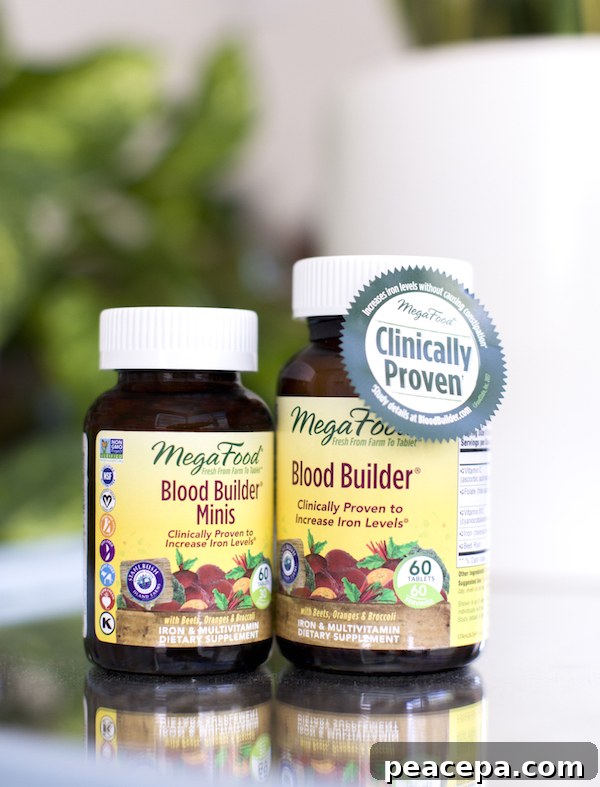
My preferred iron supplement is Blood Builder from Megafood, which some studies report can raise iron markers without the common side effects of many iron supplements, such as nausea and constipation. Dr. Tieraona Low Dog has noted that iron deficiency is an underrecognized women’s health concern in the U.S., with many women unaware they have low iron levels.
I believe lifestyle and a whole-food plant-based diet should be the foundation for health, but targeted supplementation can be a sensible addition when indicated. Before trying Blood Builder, I had never taken an iron supplement. Despite avoiding red meat and following a vegetarian approach since 2008, my annual blood tests showed no deficiency. I do, however, tend to feel more fatigued during my period. Taking Blood Builder has helped reduce that monthly fatigue for me. I appreciate that the formula includes food-based ingredients like beets, folate, B12, and vitamin C from whole oranges—components that support red blood cell production and iron absorption. Because the supplement is designed to be food-state and gentle, I have not experienced constipation.
Blood Builder and Blood Builder Minis are available at natural grocers, supplement stores, and online.
If you have questions about iron deficiency or the Megafood Blood Builder, feel free to ask. If you’ve tried Blood Builder, I’d love to hear about your experience.
Note: I am a paid MegaFood ambassador but all thoughts and opinions are my own.
°°°
*This statement has not been evaluated by the Food & Drug Administration. This product is not intended to diagnose, treat, cure or prevent any disease.
†D’Adamo, C., Berman, B., Chen, K., & Novick, J. (2016). Effects of a commercially-available, low-dose iron supplement (Blood Builder®) on markers of iron status among premenopausal and non-anemic, iron-deficient women. | ©FoodState, Inc. 2017
(1) CDC, 2nd National Report on the Biochemical Indicators of Diet and Nutrition in the U.S. Population