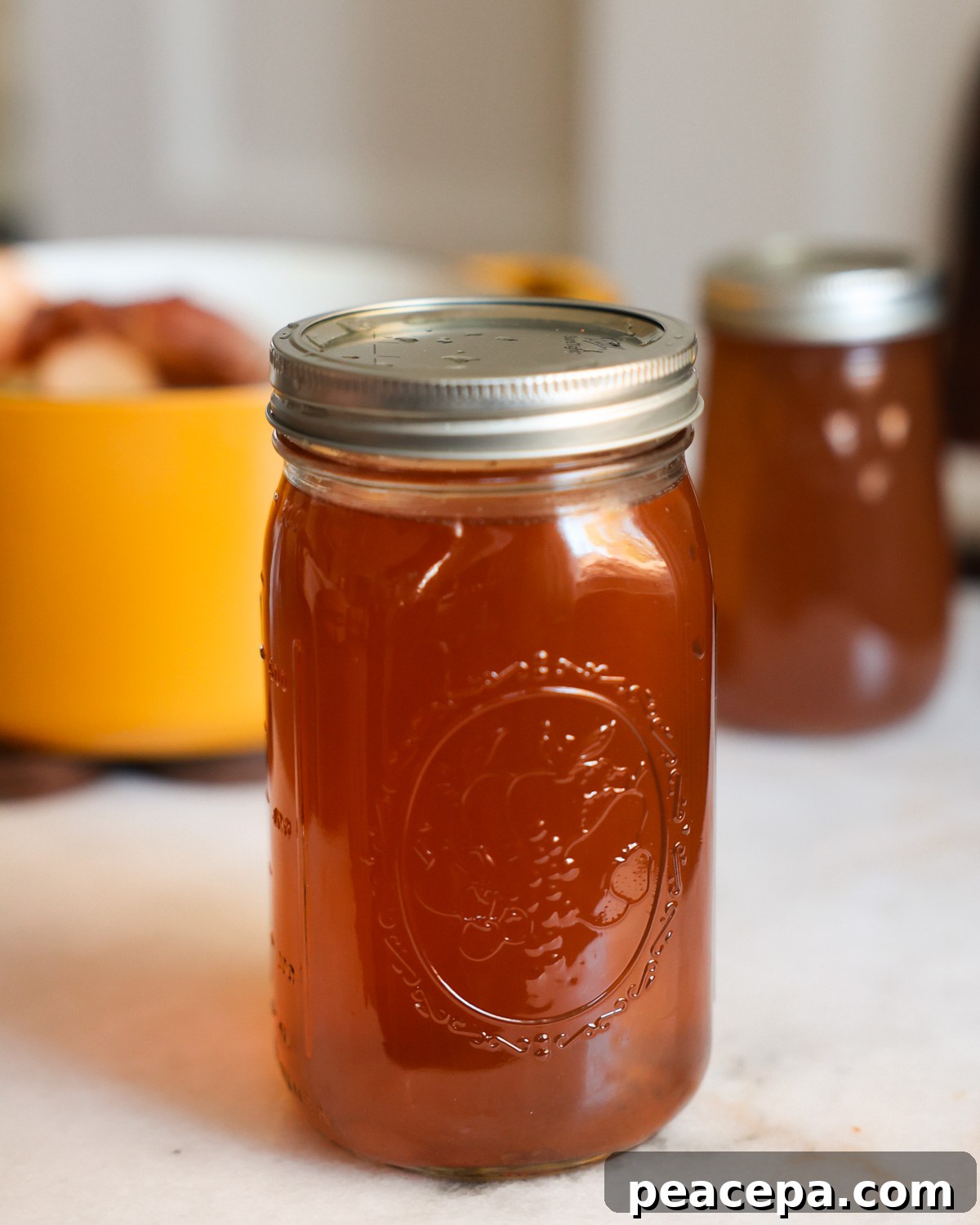
This Homemade Vegetable Stock is simple to prepare, full of nutrients, and far superior to most store-bought options. Use vegetable scraps to reduce waste or fresh vegetables when you don’t have scraps on hand. Both yield a flavorful broth that’s perfect for soups, stews, and savory dishes.
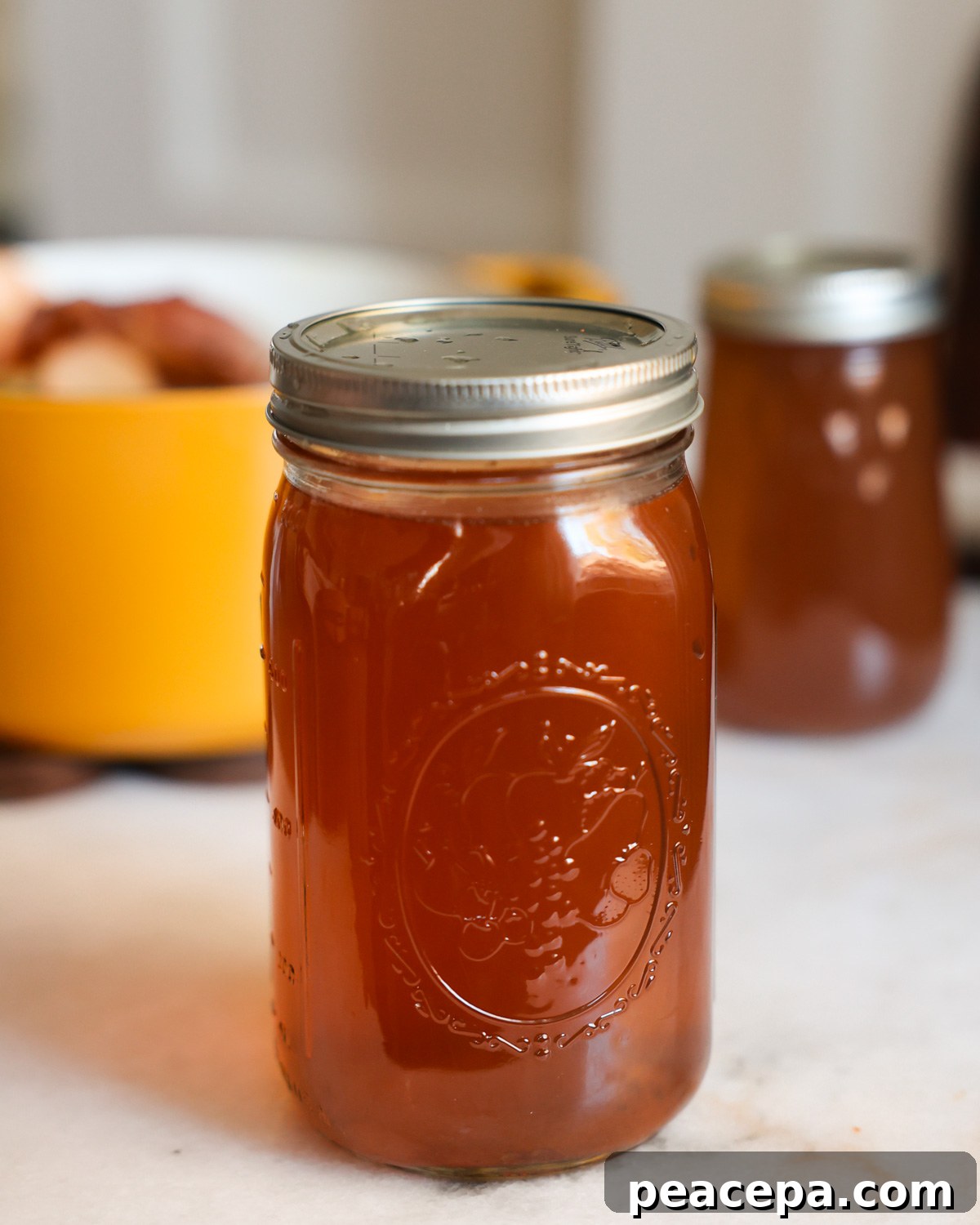
If you haven’t tried making your own vegetable stock, now is a great time. It’s easy, nutritious, and can be essentially free if made from saved scraps. I keep a container in the freezer for trimmed vegetable pieces and herb stems; when it’s full I simmer everything into a delicious stock. The process is straightforward: simmer, strain, and store.
If you need stock but don’t have scraps, this recipe includes instructions for using fresh vegetables. You can double the batch and freeze the extra for later, or adapt the flavors using the variations below.
What Is the Difference Between Broth and Stock?
Traditionally, stock is made from bones and simmered longer without added salt, while broth is made from meat or vegetables and is usually seasoned. This recipe is plant-based and unsalted, simmered briefly, so it aligns more with a stock. That said, you can call it broth if you prefer and add salt to taste.
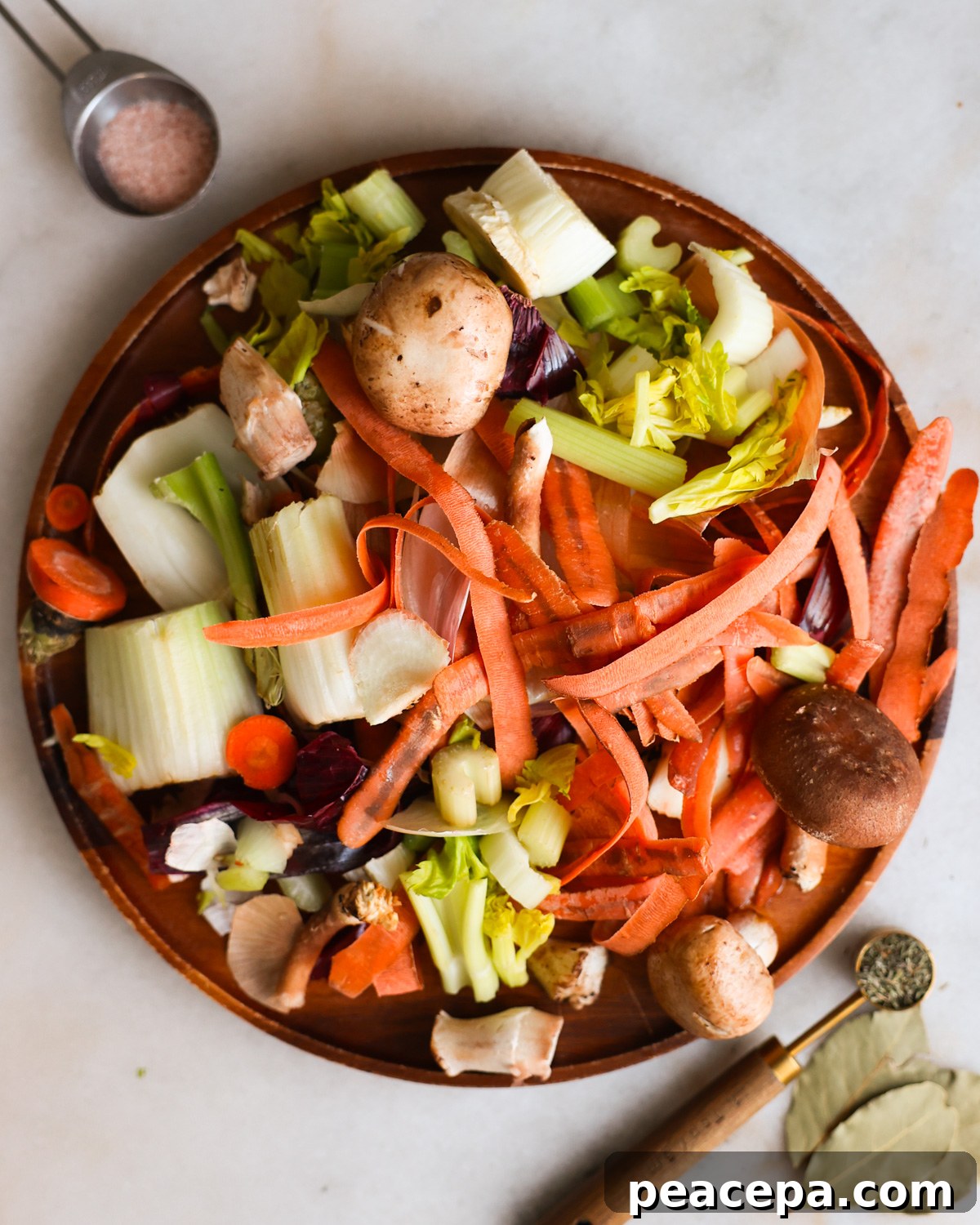
Ingredients
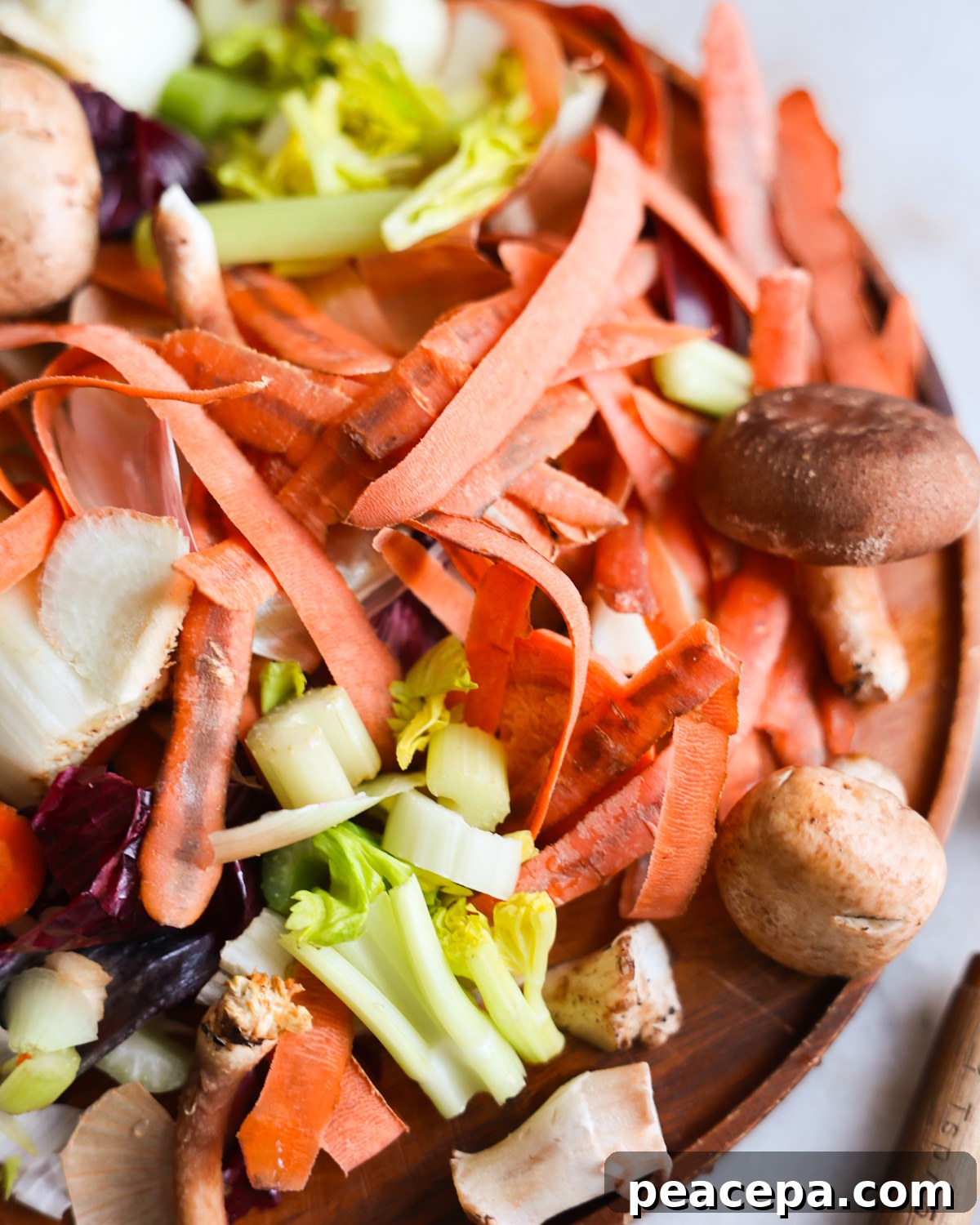
Vegetable scraps: The core of this recipe. Use cleaned, non-starchy scraps such as carrot peels and tops, celery ends, onion skins and halves, leek greens, herb stems, garlic skins and cloves, green onion tops, tomato cores, leafy greens, and mushroom stems. Avoid starchy scraps like potatoes, parsnips, and peas.
Bay leaves: 1–2 dried bay leaves add a subtle herbal layer. Fresh bay leaves work too if available.
Dried thyme: 1–2 teaspoons adds an earthy, herbaceous note. You can substitute sage, rosemary, or a mixed herb blend if desired.
Water: Use filtered water for the cleanest flavor. Plan on about 8–10 cups for 4–6 cups of vegetable scraps.
Using Fresh Vegetables
To make this stock with fresh produce, use 4–6 cups total of the following:
- Onions, carrots, and celery (the classic mirepoix base)
- Crushed garlic cloves
- Shiitake or baby bella mushrooms (stems are great)
- A handful of fresh herbs (parsley, thyme, or bay)
- 2 dried bay leaves
- Optional: chopped leeks or fennel fronds for extra aroma
How to Make Vegetable Stock
- Combine ingredients: Place vegetable scraps or fresh chopped vegetables, bay leaves, thyme, and water in a large pot and bring to a boil over high heat.
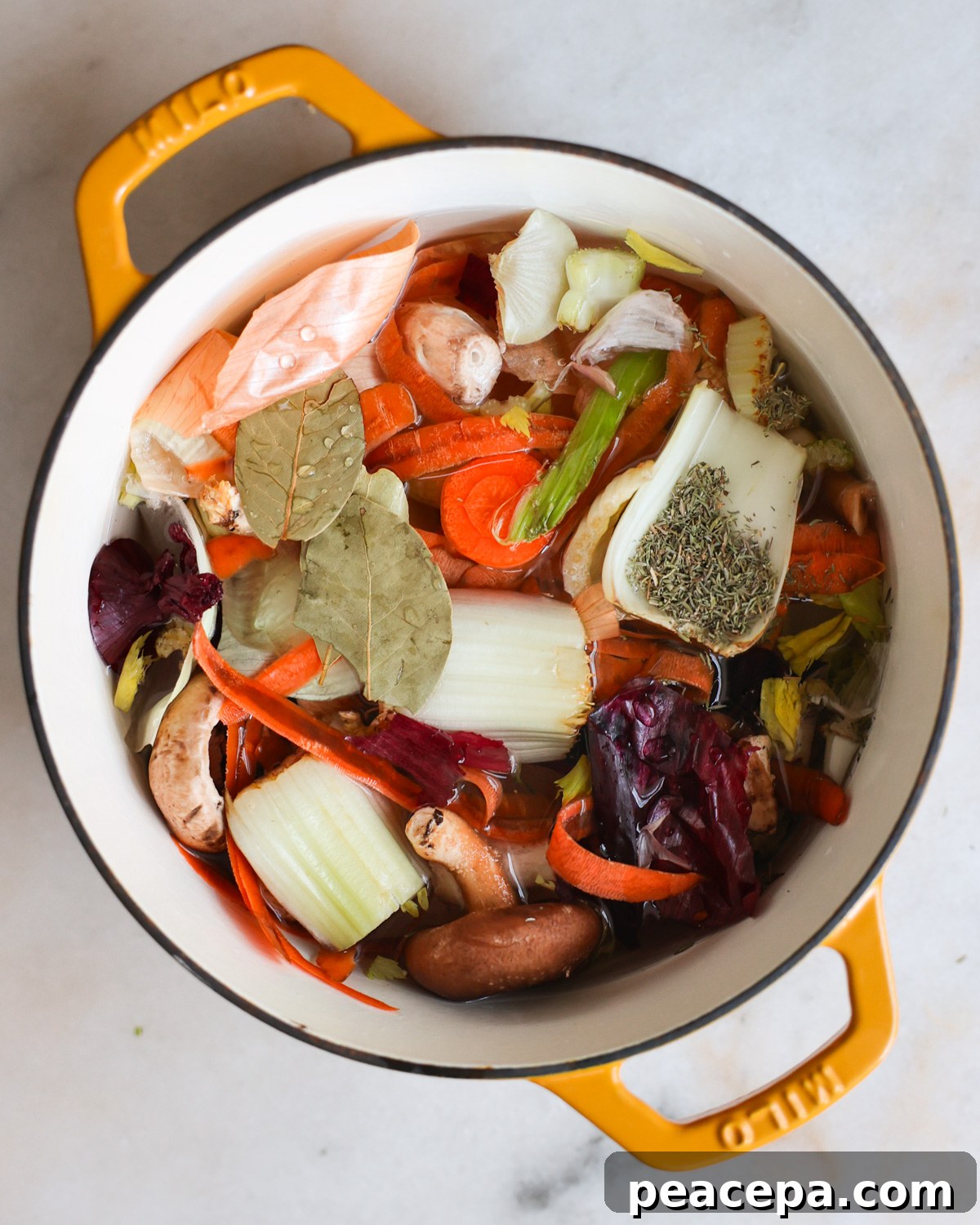
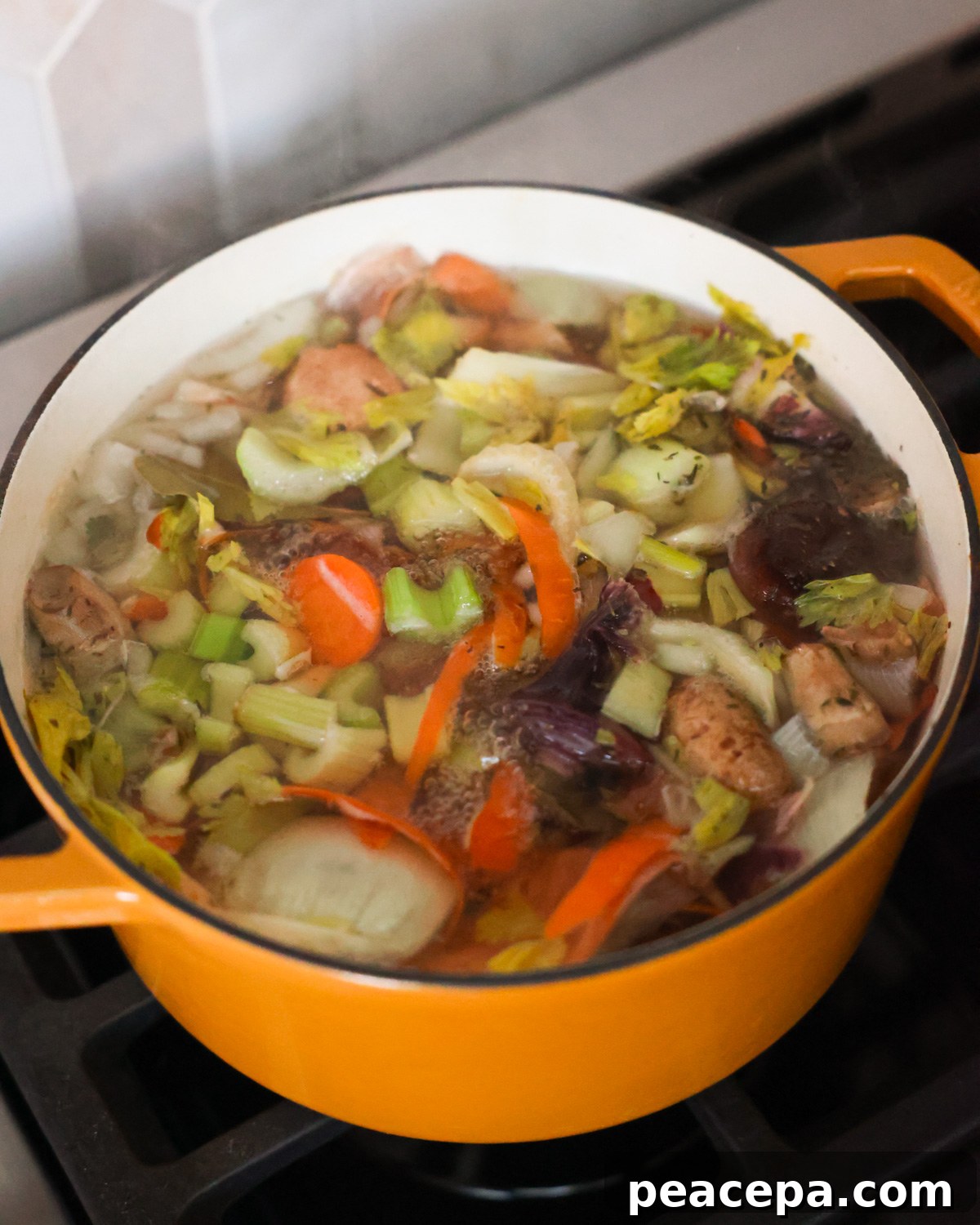
- Simmer: Lower the heat and maintain a gentle simmer. Cover the pot and cook for 30 minutes. Longer simmering will deepen flavor but isn’t necessary for a good stock.
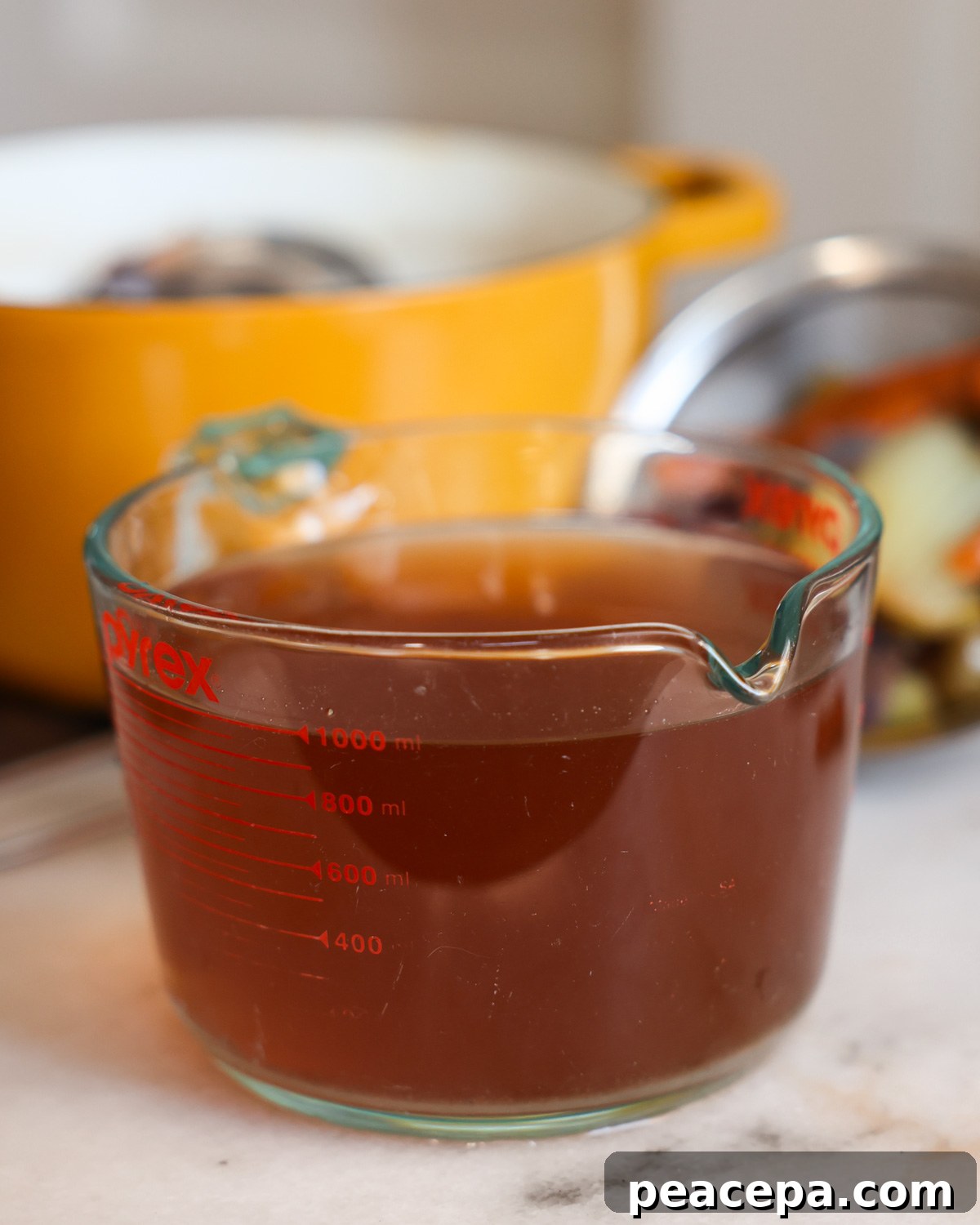
- Strain: Carefully pour the cooked mixture through a fine mesh strainer or a cheesecloth-lined sieve to separate solids from the liquid.
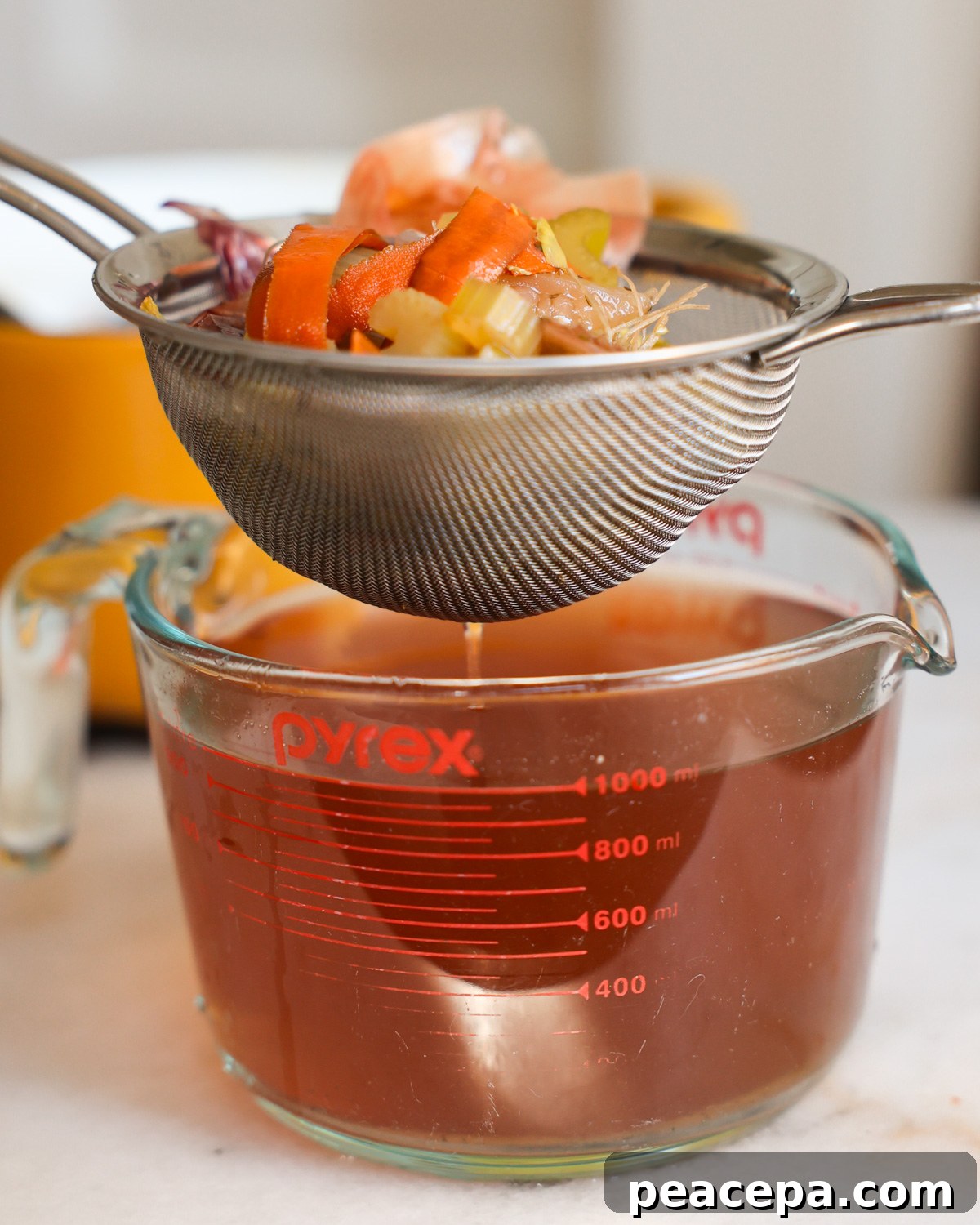
- Cool and store: Let the stock cool to room temperature in the pot or a shallow heat-safe bowl. Transfer to clean glass jars or containers and refrigerate or freeze.
Recipe Pro-Tips
- Avoid starchy scraps: Potatoes, parsnips, peas, and similar starchy vegetables can cloud or thicken the stock.
- Drain thoroughly: For a clear stock, strain through a fine mesh strainer and line it with cheesecloth if pieces are very small.
- Salt later: This stock is intentionally unsalted so it can be used flexibly in recipes. Add 1–2 teaspoons of fine sea salt if you prefer it seasoned.
How to Store Veggie Scraps
Short-term: Keep fresh scraps in a ventilated produce bag in the fridge for 1–2 days. Long-term: Freeze scraps in a freezer-safe container for up to 3 months. Frozen scraps can be added directly to the pot without thawing.
Flavor Boosters & Variations
Customize the stock to suit what you have on hand or the flavor direction you want:
- Nutritional yeast: Add a few teaspoons while simmering for a savory, almost cheesy undertone.
- Tomato: A tablespoon of tomato paste or a few sun-dried tomatoes gives a rich tomato depth.
- Soy or tamari: A couple of tablespoons add salty umami without overpowering.
- Mushrooms: Up to 2 cups of mushroom stems boost body and umami.
- Herb swaps: Try rosemary, sage, Herbes de Provence, or an Italian seasoning blend for different profiles.
Storage Directions
- Refrigerate: Once cooled to room temperature, store in sealed glass containers in the fridge for up to 7 days.
- Freeze: Pour into freezer-safe containers or zip-top bags and freeze up to 6 months. Thaw overnight in the refrigerator or warm gently on the stove.
- Reheat: Warm in a saucepan over medium heat or in the microwave until hot.
Frequently Asked Questions
Avoid starchy vegetables like potatoes, parsnips, peas, yucca, and plantains, as they can make the broth cloudy or thick.
Enhance flavor with fresh or dried herbs, garlic, tomato paste, sea salt, whole peppercorns, soy sauce, or umami-rich mushrooms.
Yes—when using scraps, homemade stock is far more economical than buying prepackaged broth. It’s also more sustainable and reduces food waste.
Cozy Vegan Soup Recipes
Use this homemade stock as a base for a variety of soups and stews. It pairs well with roasted squash, lentils, beans, or curried root vegetable soups.
Vegetable Stock
Ingredients
- 4-6 cups vegetable scraps From cleaned, non-starchy vegetables like carrots, celery, onions, leeks, herbs, garlic, green onions, tomatoes, mushrooms, and greens
- 1-2 dried bay leaves
- 1-2 tsp dried thyme
- 8-10 cups water
Instructions
- Combine all ingredients in a large pot and bring to a boil over high heat.
- Reduce heat to low or medium-low to maintain a gentle simmer. Cover and cook for 30 minutes.
- Strain the broth through a fine mesh strainer or cheesecloth. Allow to cool, then transfer to glass containers for storage.
Notes
- Refrigeration: Cool completely, then refrigerate up to 7 days in sealed glass containers.
- Freezing: Freeze in containers or bags for up to 6 months. Thaw overnight in the fridge or warm gently on the stovetop.
- Reheating: Warm in the microwave or on the stove until hot.
Recipe Pro-Tips
- Fresh vegetable option: Use 4–6 cups of chopped onions, carrots, and celery, 3–4 crushed garlic cloves, fresh herbs, 2 bay leaves, and optional leeks or fennel fronds.
- Avoid starches: Do not use potato, parsnip, or pea scraps to prevent cloudiness or thickness.
- Strain well: For a clear stock, use a fine mesh strainer or cheesecloth.
- Salt to taste: The stock is unsalted by design; add 1–2 teaspoons of fine sea salt if desired.