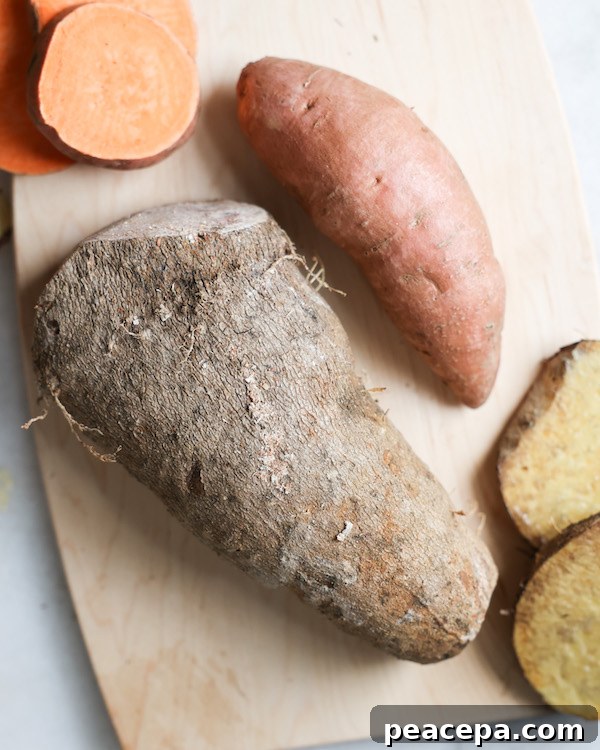
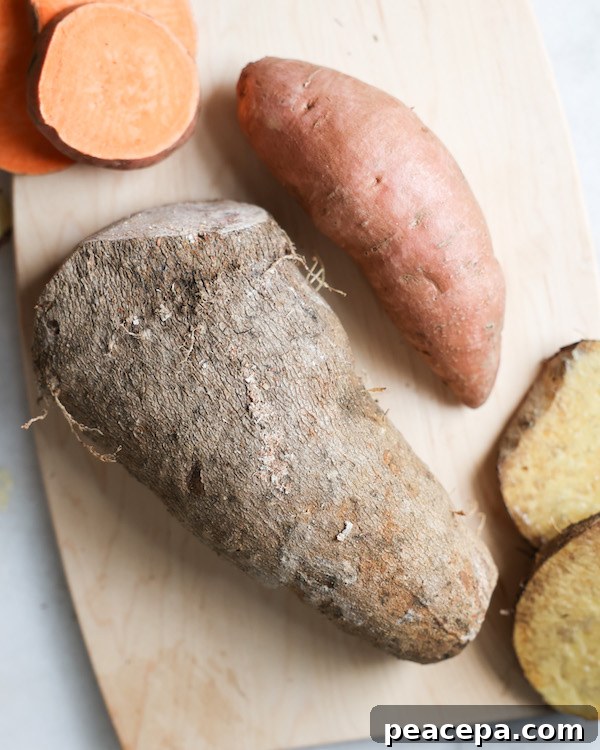
People often confuse sweet potatoes and yams, and in the United States the terms are frequently used interchangeably. However, true yams and sweet potatoes are distinct plants with different appearances, flavors, and culinary uses. It’s likely many shoppers have never seen an actual yam.
As someone who enjoys cooking with sweet potatoes, I’ll explain the main differences and give practical tips for buying and cooking each one.
Are Yams and Sweet Potatoes The Same?
No. Though they may appear similarly starchy on the plate, yams and sweet potatoes come from different plant families and have different textures, skins, and flavors.
Yams
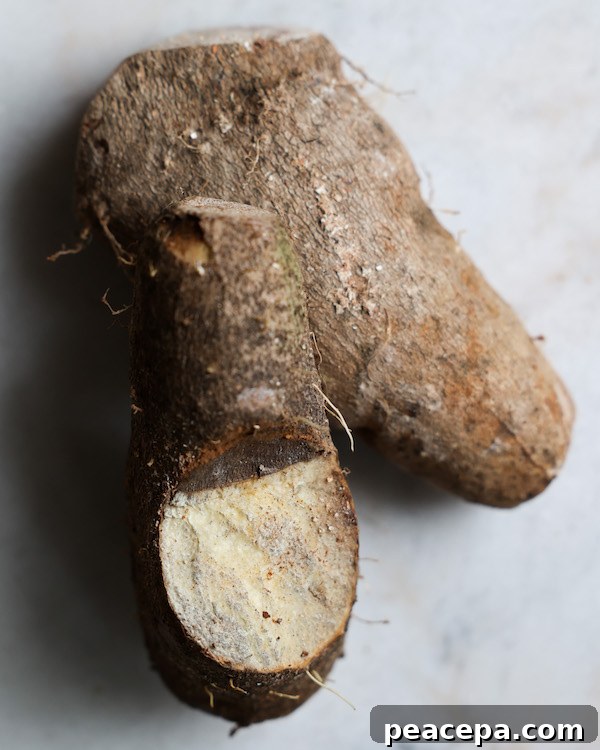
True yams belong to the Dioscorea genus and are native to Africa and parts of Asia. They are starchy tubers commonly used across West African, Caribbean, and Latin American cuisines. In markets you might see them labeled with regional names such as nyami or namé.
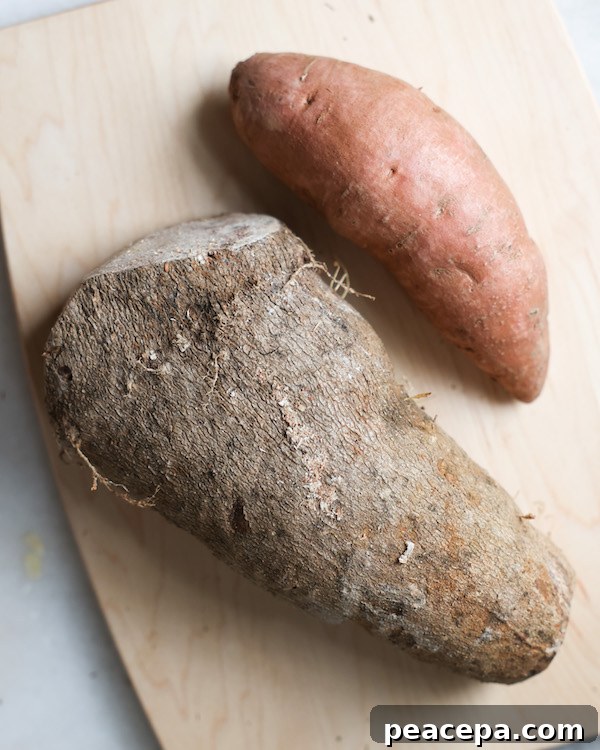
Yams typically have rough, bark-like brown skin and white or yellowish flesh. Their texture is firm and starchy with a mild, subtly earthy flavor. Yams can grow very large and are often prepared in savory dishes like stews, pounded yam, or yam pepper soup.
Sweet potatoes
Sweet potatoes are true roots and belong to the morning glory family. They originated in Central and South America and differ botanically and visually from yams.
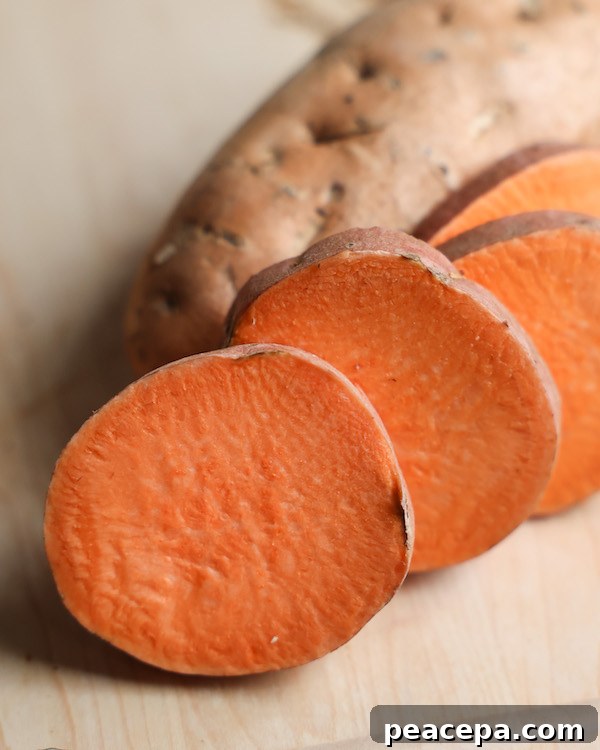
Sweet potatoes usually have smoother skin that varies by variety—orange, tan, purple, or grey. Their flesh ranges from white to deep orange or vivid purple and tends to taste noticeably sweeter than yams. There are many varieties, some starchier and drier, others moister and sweeter. Sweet potatoes are versatile and used in both savory dishes and desserts.
Which is more nutritious?
Both yams and sweet potatoes are nutritious, offering fiber, potassium, vitamin C, and complex carbohydrates. Sweet potatoes generally provide more vitamin C and beta-carotene (especially orange varieties), while yams can offer higher levels of certain minerals such as copper. Both are healthy choices when included in a balanced, plant-forward diet.
Why are Sweet Potatoes Called Yams?
In U.S. grocery stores, orange-fleshed sweet potatoes are frequently labeled as “yams.” There are a few explanations for this naming overlap:
– Enslaved Africans who encountered sweet potatoes in the Americas called them “yams” because the new vegetable resembled the yams they knew from West Africa. The name persisted in popular usage.
– When orange-fleshed sweet potato varieties became more common, producers and sellers sometimes called them “yams” to distinguish them from pale-fleshed varieties. Over time that labeling stuck in supermarkets.
Key Differences Between Sweet Potatoes & Yams
Sweet Potatoes
– Smooth skin
– Flesh colors: white, orange, or purple
– Readily available in mainstream American grocery stores
– Naturally sweet flavor
– Common in Southern U.S. cooking and many global recipes
– Grown in temperate to warm regions, including parts of the southern United States
Yams
– Rough, bark-like skin
– Flesh often white or yellowish
– Mild, starchy flavor rather than sweet
– Can grow very large
– Typically found at African, Caribbean, and specialty markets
– Grown in tropical climates and featured in many African and Caribbean dishes
Both are Easy to Cook
Both sweet potatoes and true yams are straightforward to cook—mostly they need time. Yams are frequently boiled or simmered in stews. Sweet potatoes are extremely versatile: you can bake, roast, steam, boil, microwave, or air-fry them, and they also cook quickly in pressure cookers like an Instant Pot.
Cooking whole preserves moisture and flavor, while cutting into pieces speeds cooking time. Test doneness with a fork—the fork should slide through easily when fully cooked.
Types of Sweet Potatoes
Yams are uncommon in mainstream U.S. supermarkets, but sweet potatoes come in many popular varieties. Common types include:
Jewel: lighter orange skin and flesh; high moisture content.
Garnet: darker orange to reddish skin with orange flesh; moist and sweet.
Beauregard: one of the most common U.S. varieties; darker orange skin and flesh, slightly starchier but still moist.
Asian or Caribbean varieties: purplish skin with yellowish-white flesh; starchy and very sweet.
Okinawan: grayish skin and bright purple flesh; starchy and sweet (sometimes referred to as purple yams, though botanically different).
Stokes: purple skin and purple flesh; a newer variety gaining popularity.
Sweet Potato Recipe Ideas
Sweet potatoes are much more than a holiday side. They work in both sweet and savory dishes. Here are popular ways to enjoy them:
– Sweet potato biscuits
– Sweet potato pie
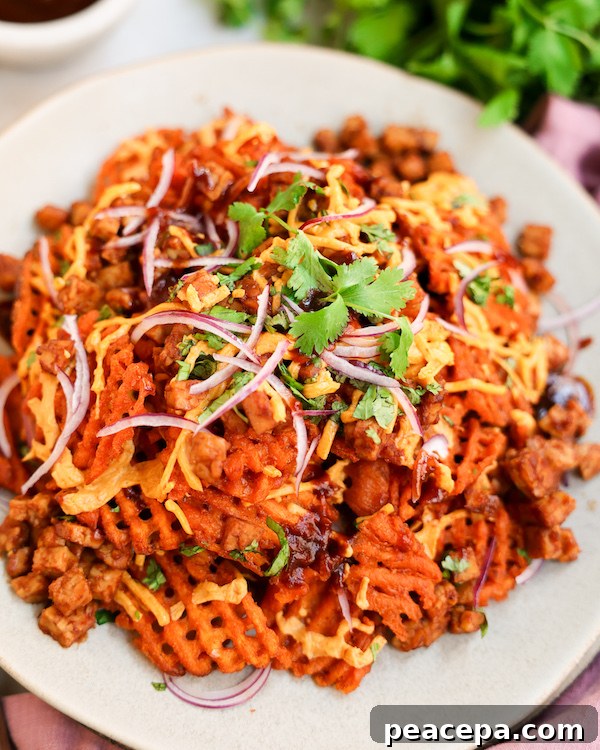
– Loaded sweet potato fries
– Sweet potato hummus
– Sweet potato granola
– West African-style peanut stew with sweet potatoes
– Red lentil and sweet potato curry
– Roasted sweet potatoes in grain bowls or Buddha bowls
– Sweet potato bisque or soup
– Black-eyed pea and sweet potato curry
Yam Recipe Ideas
True yams are central in many regional dishes. Traditional preparations include boiled or mashed yams, yam stews, and pounded yam served with stews and soups. They pair well with peanut-based or tomato-based sauces in African and Caribbean cuisines.
Whether you choose sweet potatoes or yams, both are flavorful, nutritious, and adaptable ingredients that can be prepared in many satisfying ways.