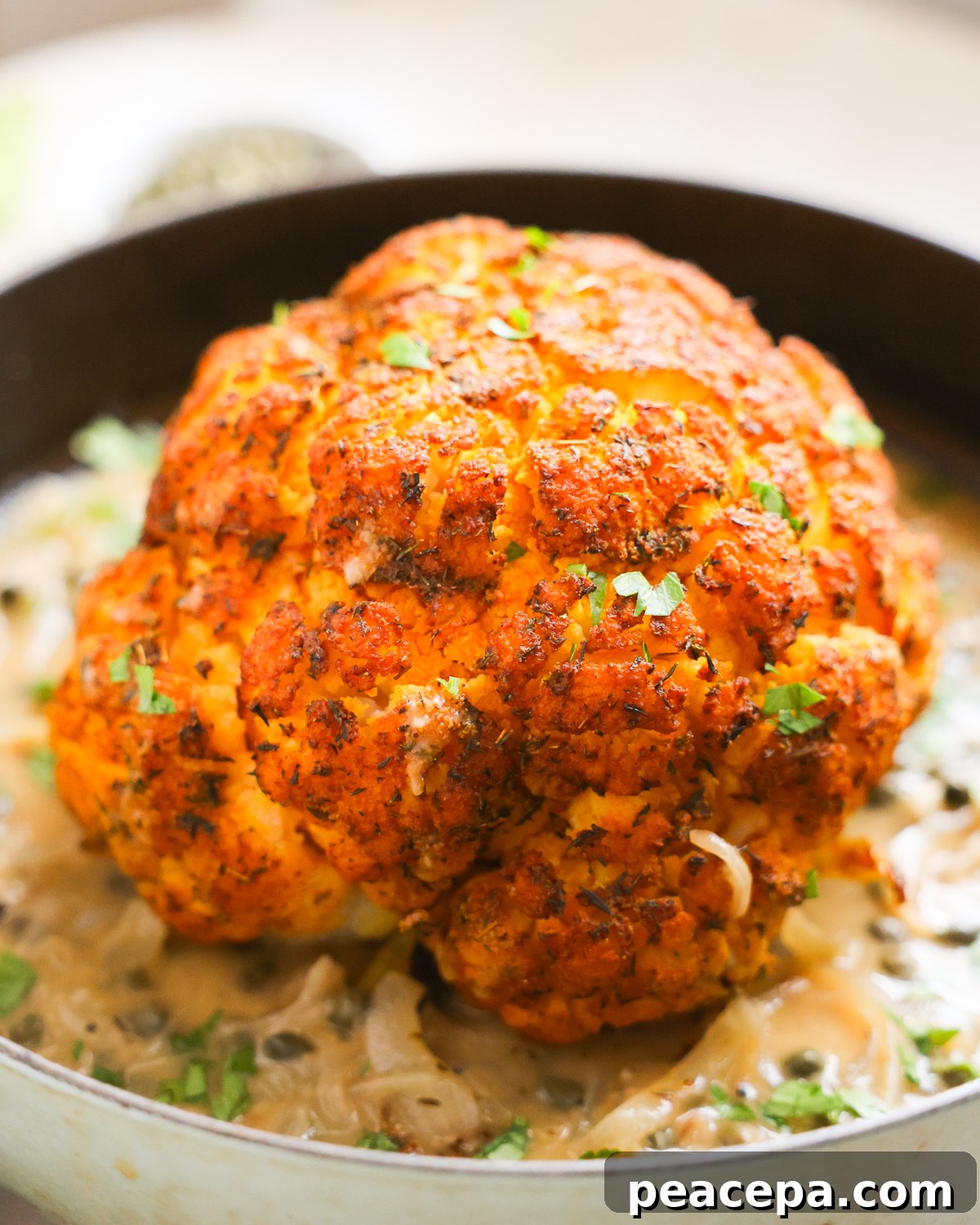
Fall in love with this Whole Roasted Cauliflower topped with a bright lemon-caper piccata sauce. It’s simple enough for weeknight dinners yet elegant enough to serve at holiday gatherings.
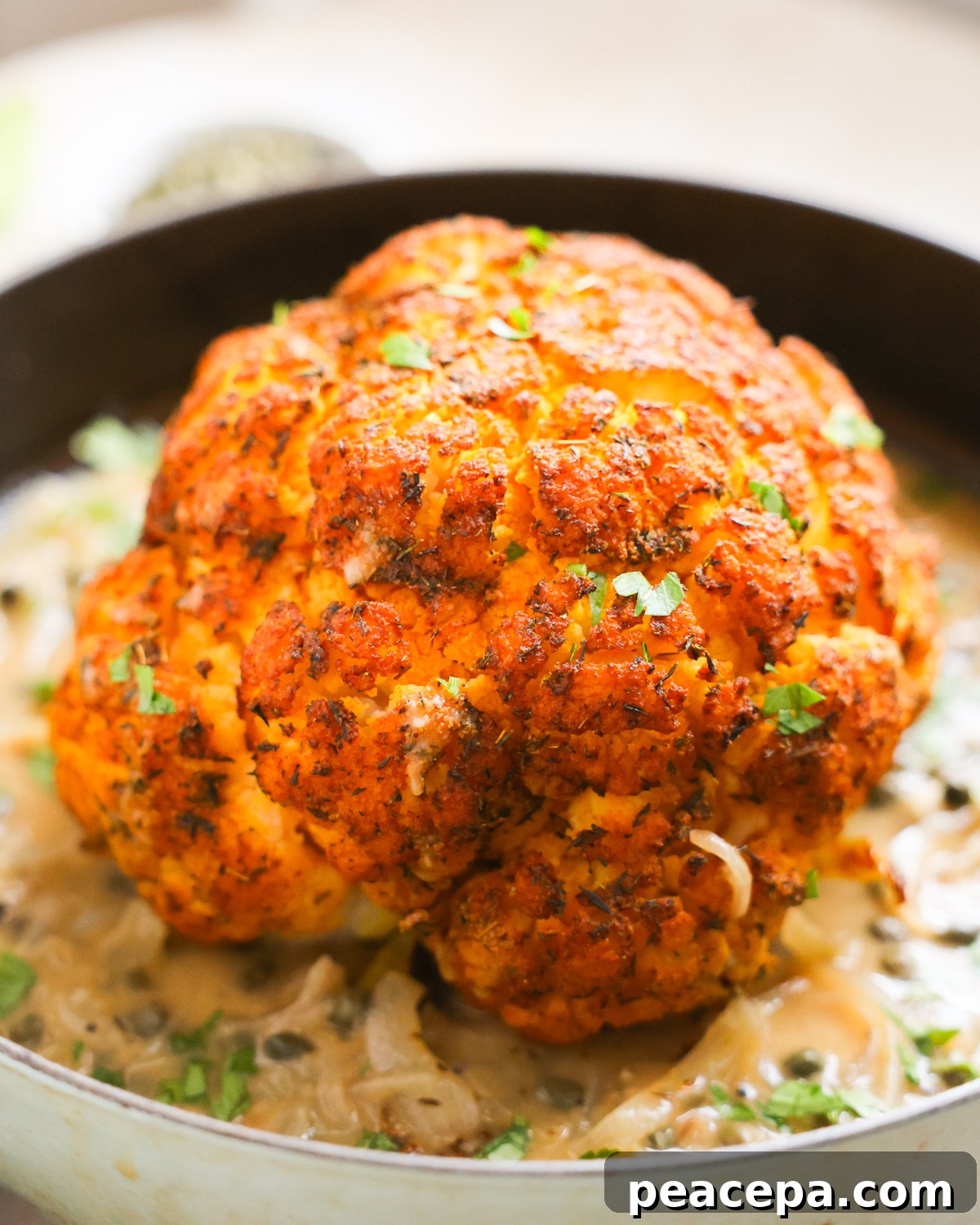
This whole roasted cauliflower is an elevated centerpiece that comes together in about 30 minutes. The head is steamed briefly, brushed with a smoky, herbed oil, then roasted until golden and tender. A silky piccata-style sauce made with caramelized onion, white wine (or extra broth), lemon juice and capers is spooned over the cauliflower for a tangy, glossy finish.
The result is a showstopping, plant-based main with balanced flavors and a restaurant-quality presentation that’s surprisingly easy to make at home.
Ingredients
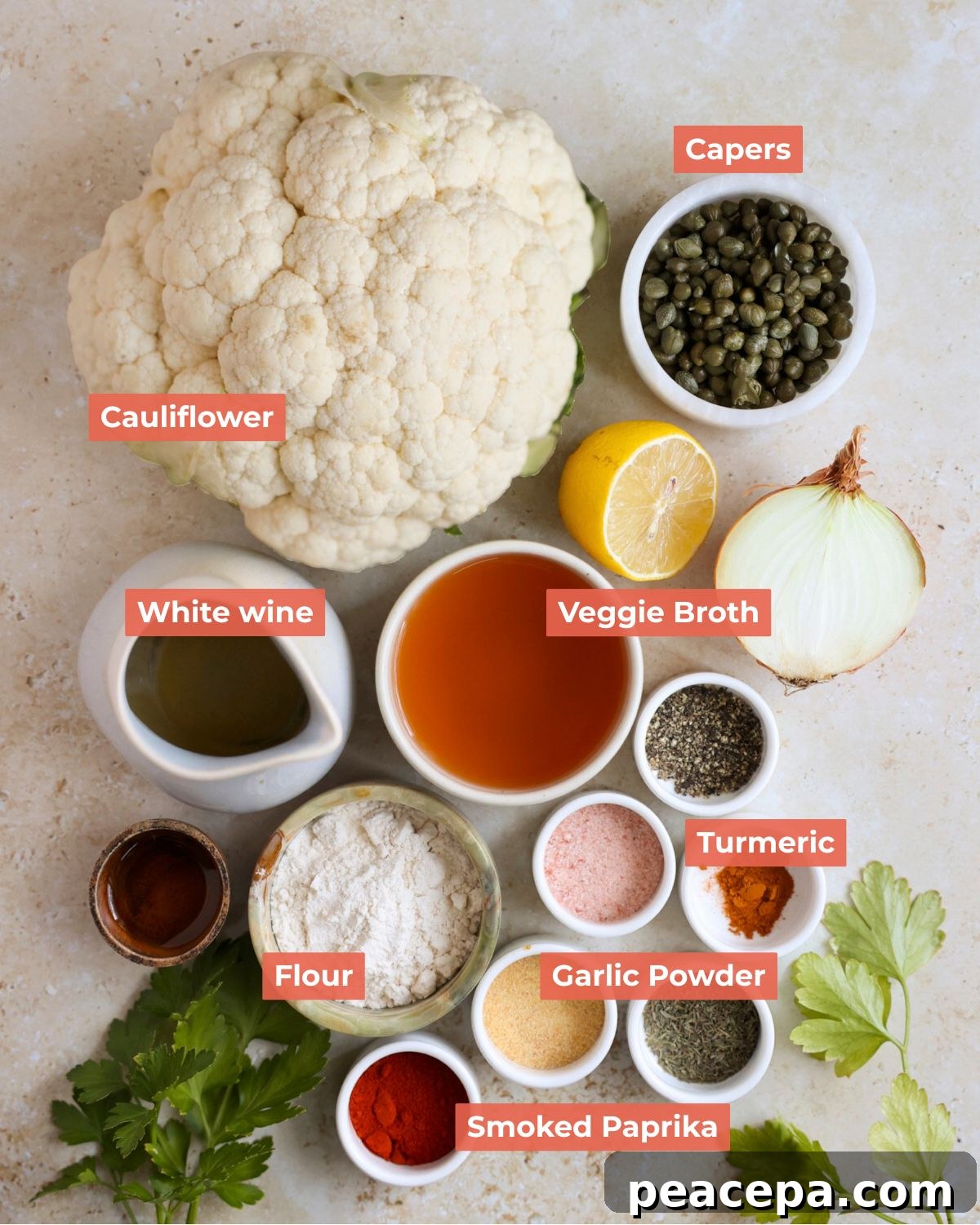
Cauliflower: Choose a medium head, about 2 lb, firm with tight florets for even cooking.
Seasonings: Dried thyme or oregano, smoked paprika, garlic powder and a pinch of turmeric for color and warmth. These spices create a golden, flavorful crust — turmeric is optional but recommended.
Olive Oil: Extra virgin olive oil is used for brushing and sautéing; avocado oil works as a neutral alternative.
Onion or Leek: Thinly sliced yellow onion caramelizes beautifully and deepens the sauce; leeks are a milder option.
Flour: All-purpose flour (or 1:1 gluten-free flour) is used to thicken the piccata sauce.
White Wine: A dry white like Pinot Grigio, Sauvignon Blanc or Chardonnay adds acidity and complexity. Substitute extra broth if skipping wine.
Vegetable Broth: Use a high-quality broth or water with a vegetable paste for good flavor.
Lemon Juice: Fresh lemon juice gives the sauce its bright, signature tang.
Capers & Pepper: Capers provide briny pop; freshly ground black pepper balances the lemon.
Fresh Parsley: Chopped parsley adds color and freshness at serving.
Recipe Variations
Customize this dish to suit the occasion:
- Herb-Crusted: Add 1 tbsp finely chopped fresh rosemary, thyme, or sage to the spice mix for an herb-forward crust.
- Creamy Piccata: Stir in 2–3 tbsp coconut cream or cashew cream at the end for a richer sauce.
- Extra Zesty: Add the zest of half a lemon to the sauce or serve with lemon wedges.
- Mushroom Piccata: Sauté 1 cup sliced cremini mushrooms with the onions for extra umami.
- Spicy Piccata: Add 1/2 tsp crushed red pepper flakes for a subtle heat.

Serving Suggestions
This whole roasted cauliflower is an impressive plant-based main. Pair it with simple sides such as fluffy mashed potatoes, roasted root vegetables, green beans, or warm biscuits to round out the meal.
How to Make Whole Roasted Cauliflower Piccata
Easy to follow, whether you’re new to cooking or comfortable in the kitchen:
- Steam: Trim outer leaves and the base so the head sits flat. Steam the whole cauliflower in a steamer basket over boiling water for 10–15 minutes, until easily pierced with a knife.
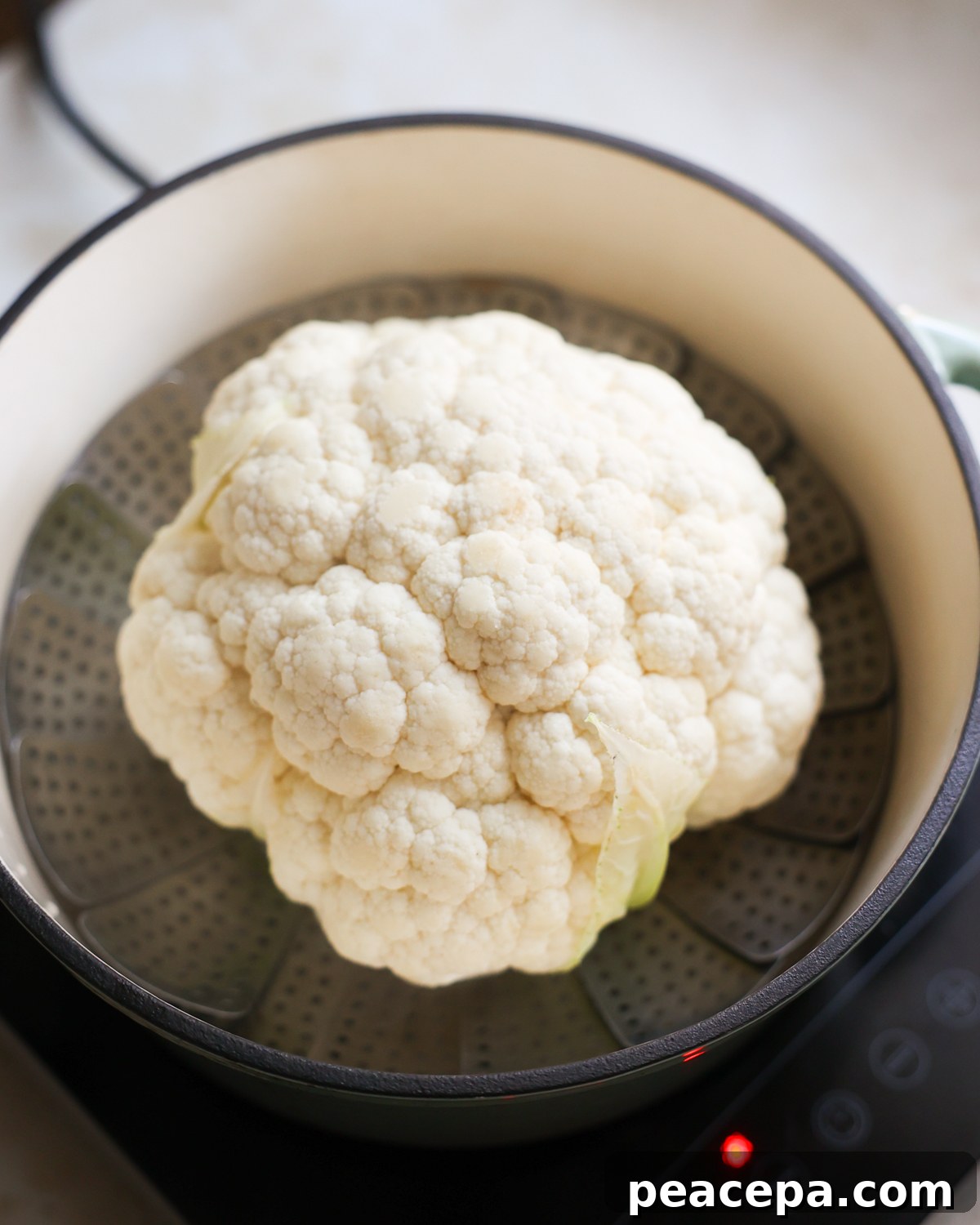
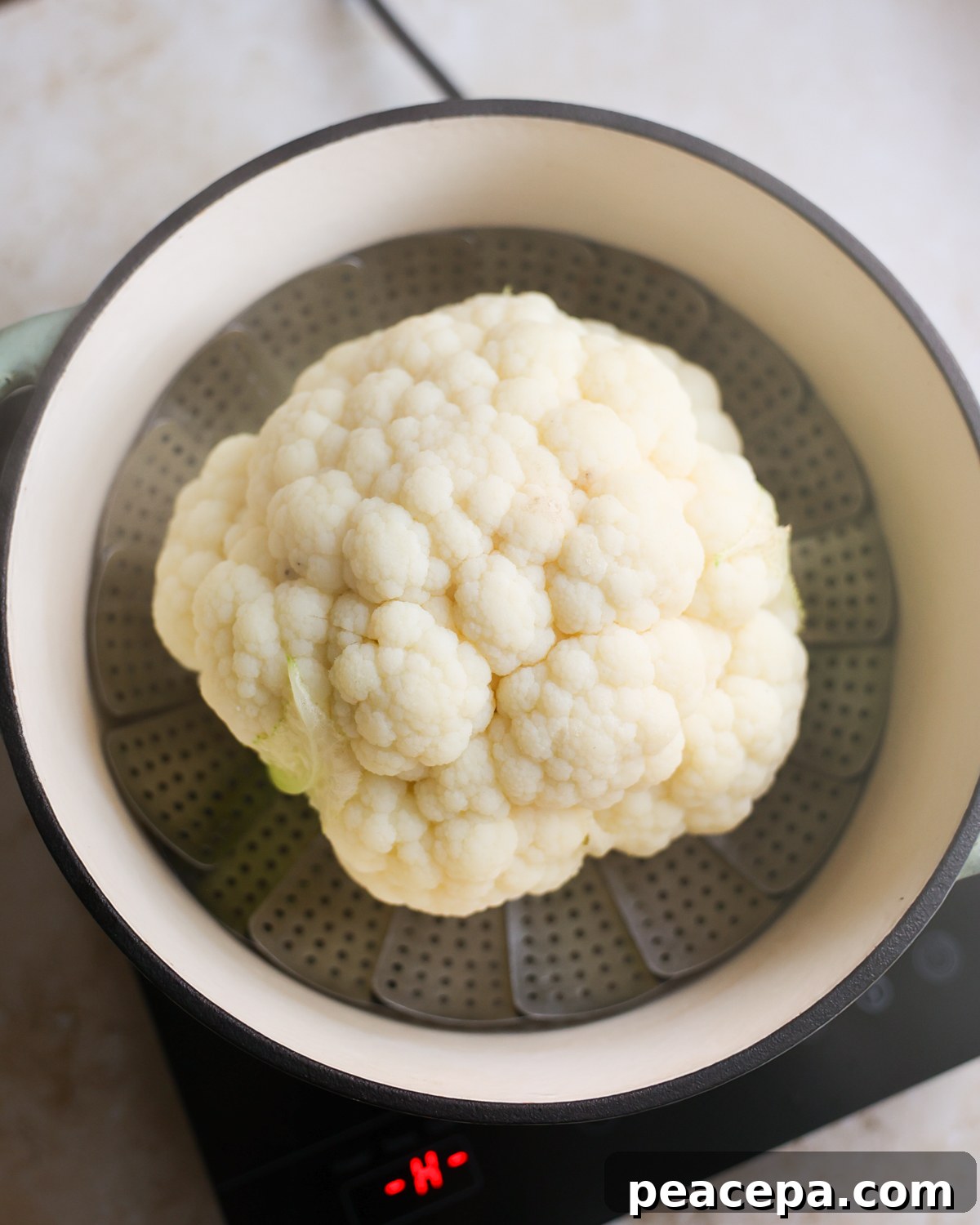
- Cool and Preheat: Let the cauliflower cool until it’s safe to handle. Preheat the oven to 375°F.
- Season: Place cauliflower in a baking dish or cast-iron skillet. Combine salt, thyme, smoked paprika, garlic powder, turmeric (optional) and olive oil; brush all over the cauliflower so it’s evenly coated.
- Roast: Roast at 375°F for about 30 minutes, until golden and tender.
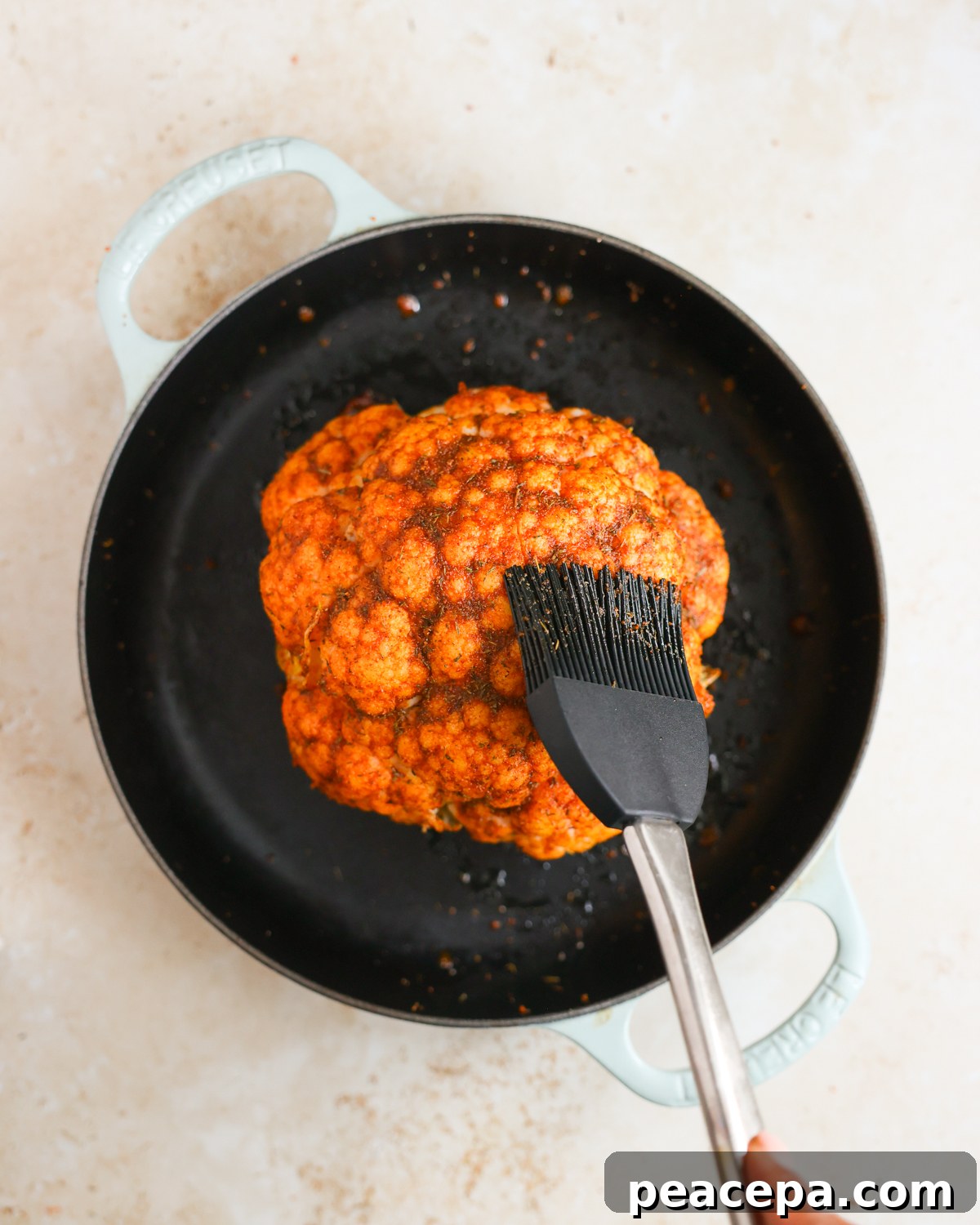
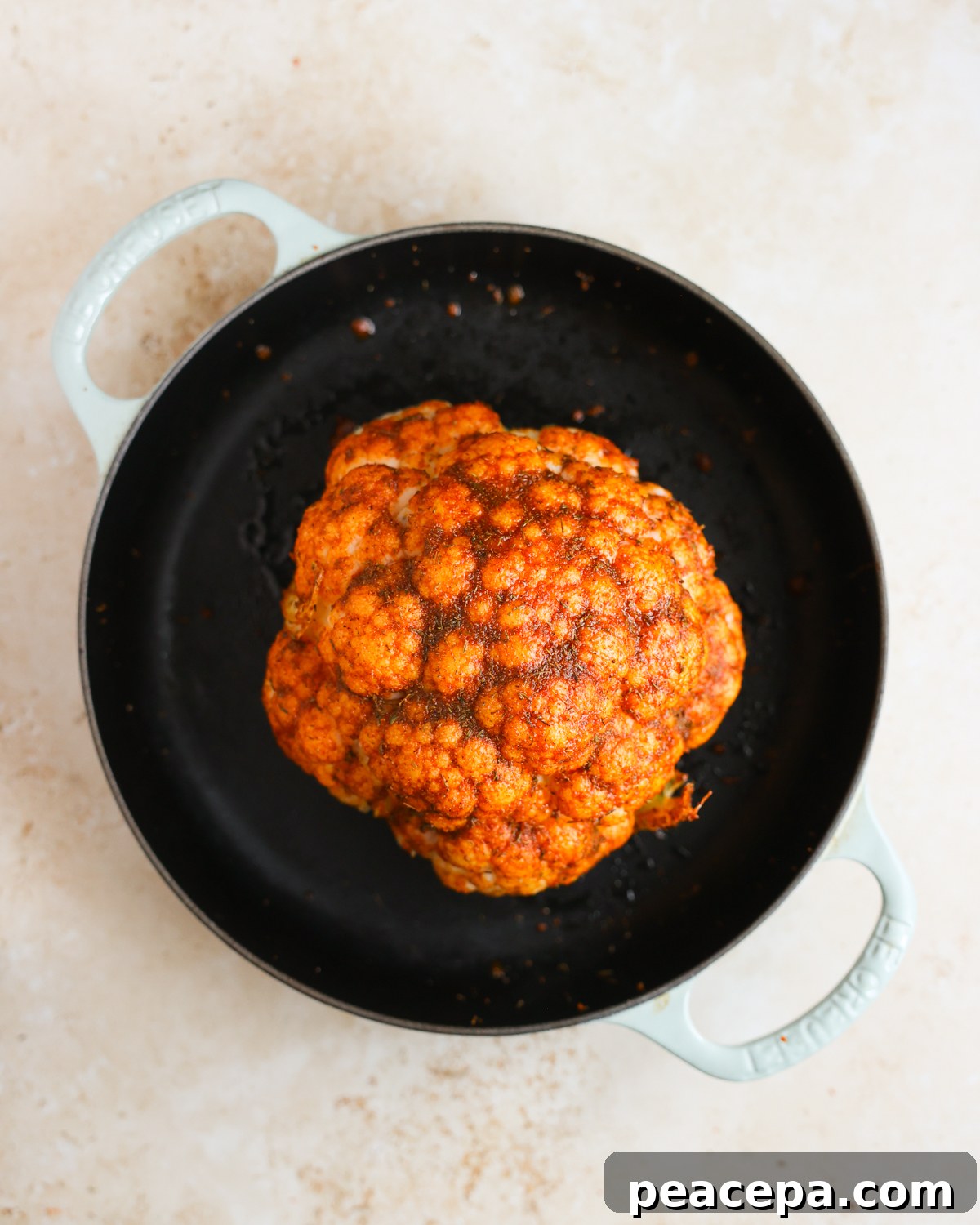
- Sauté Onions: While the cauliflower roasts, warm remaining oil in a skillet over medium heat. Add sliced onion and a pinch of salt; cook about 8 minutes until softened and beginning to caramelize.
- Toast Flour: Sprinkle flour over the onions and stir, toasting for about 3 minutes until lightly browned to avoid a raw flour taste.
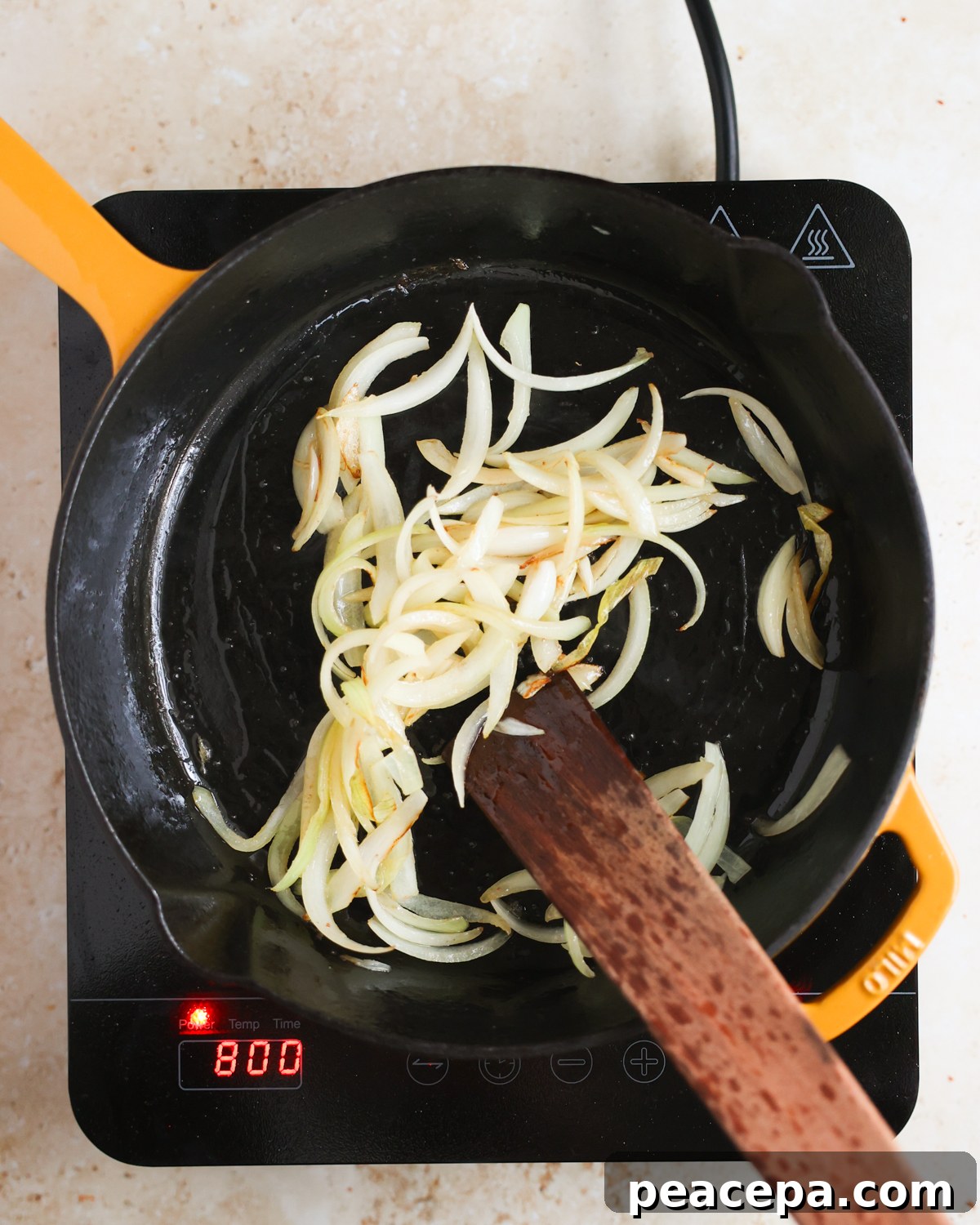
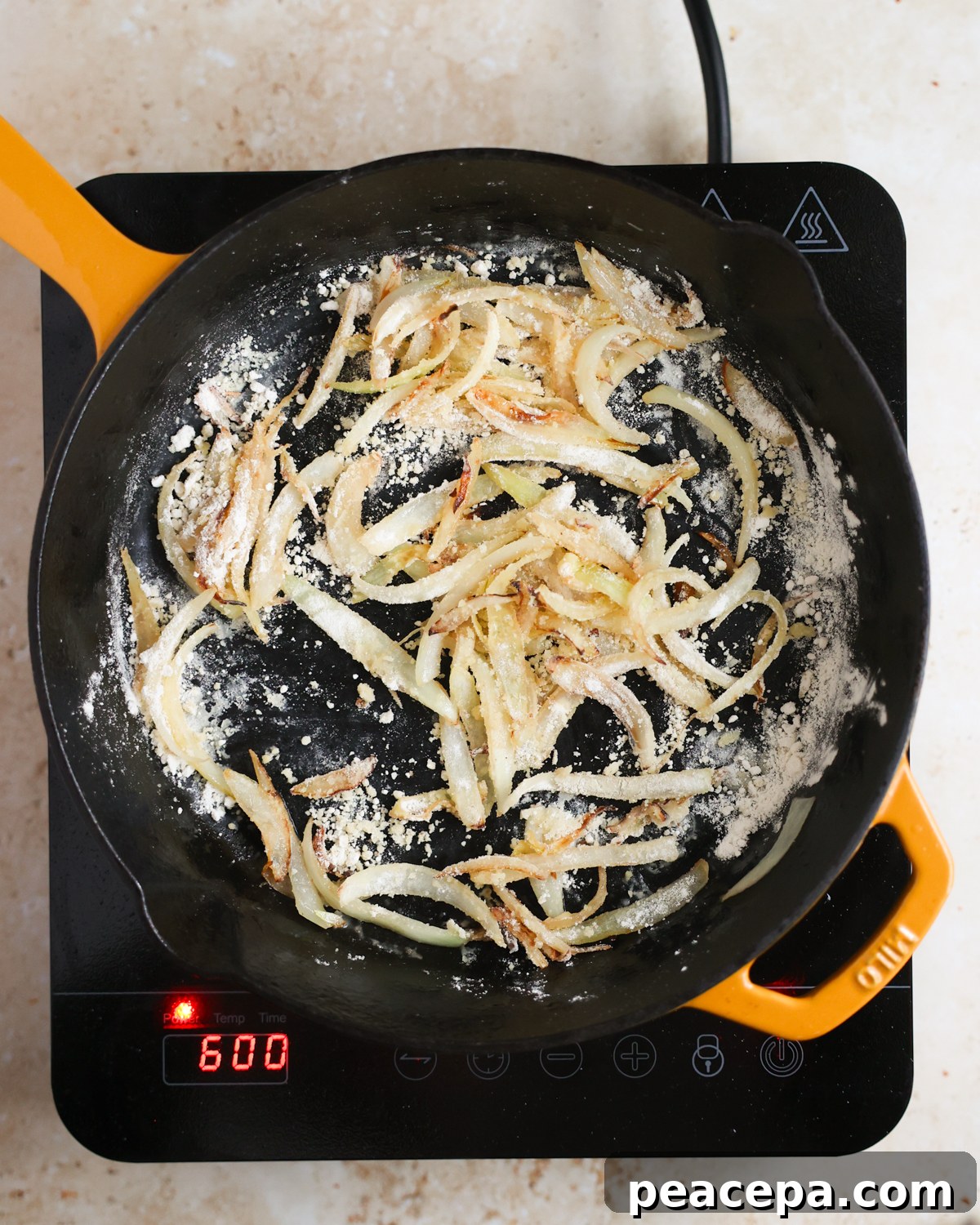
- Build the Piccata: Add the white wine and deglaze the pan, scraping up browned bits. Stir in vegetable broth, lemon juice, capers and black pepper. Simmer 10 minutes until the sauce is glossy and reduced. Taste and adjust lemon, salt and pepper.
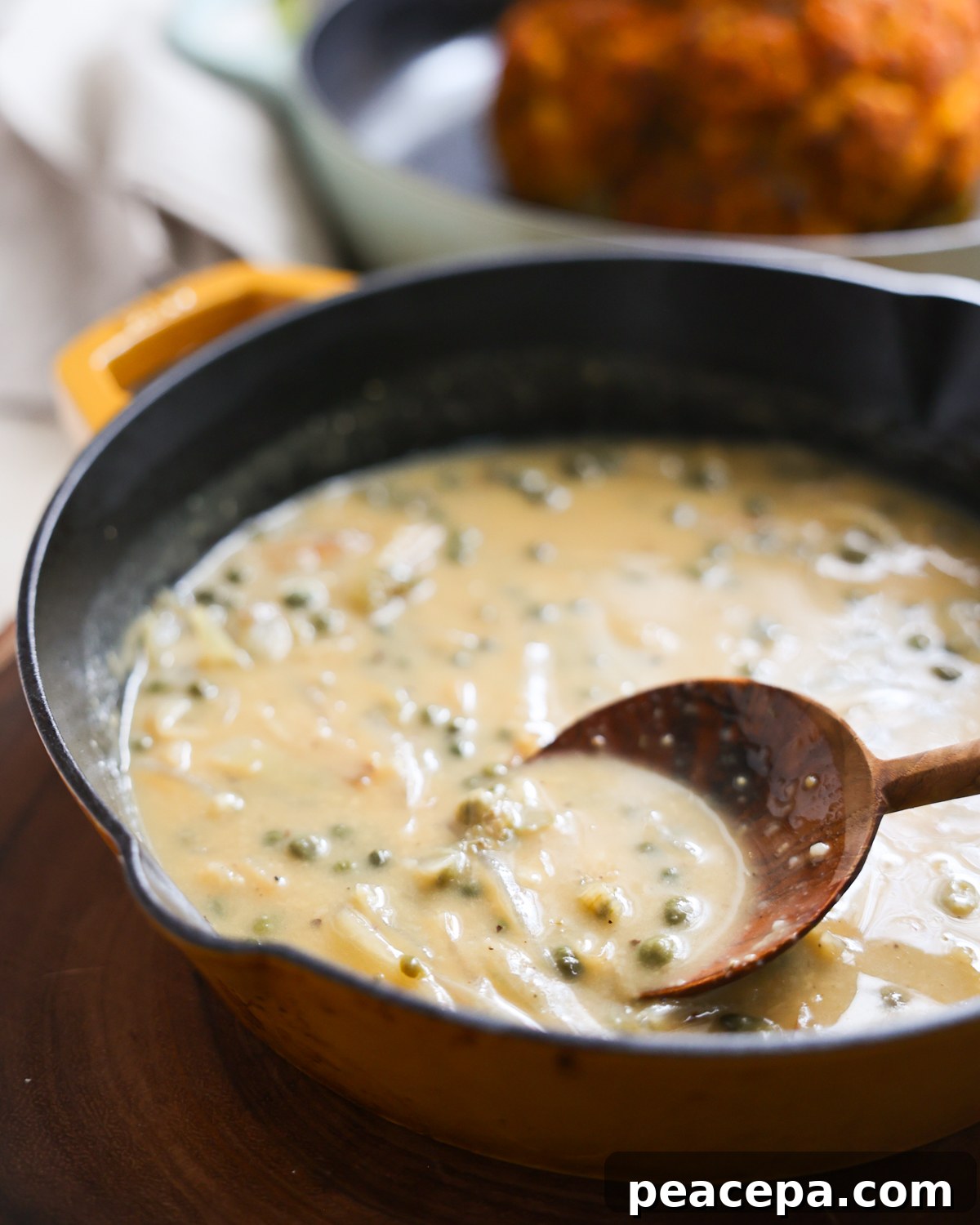
- Serve: Spoon the piccata sauce onto a platter, set the roasted cauliflower on top, and garnish with chopped parsley and freshly ground pepper. Serve with lemon wedges and slice into 4–6 wedges to plate.
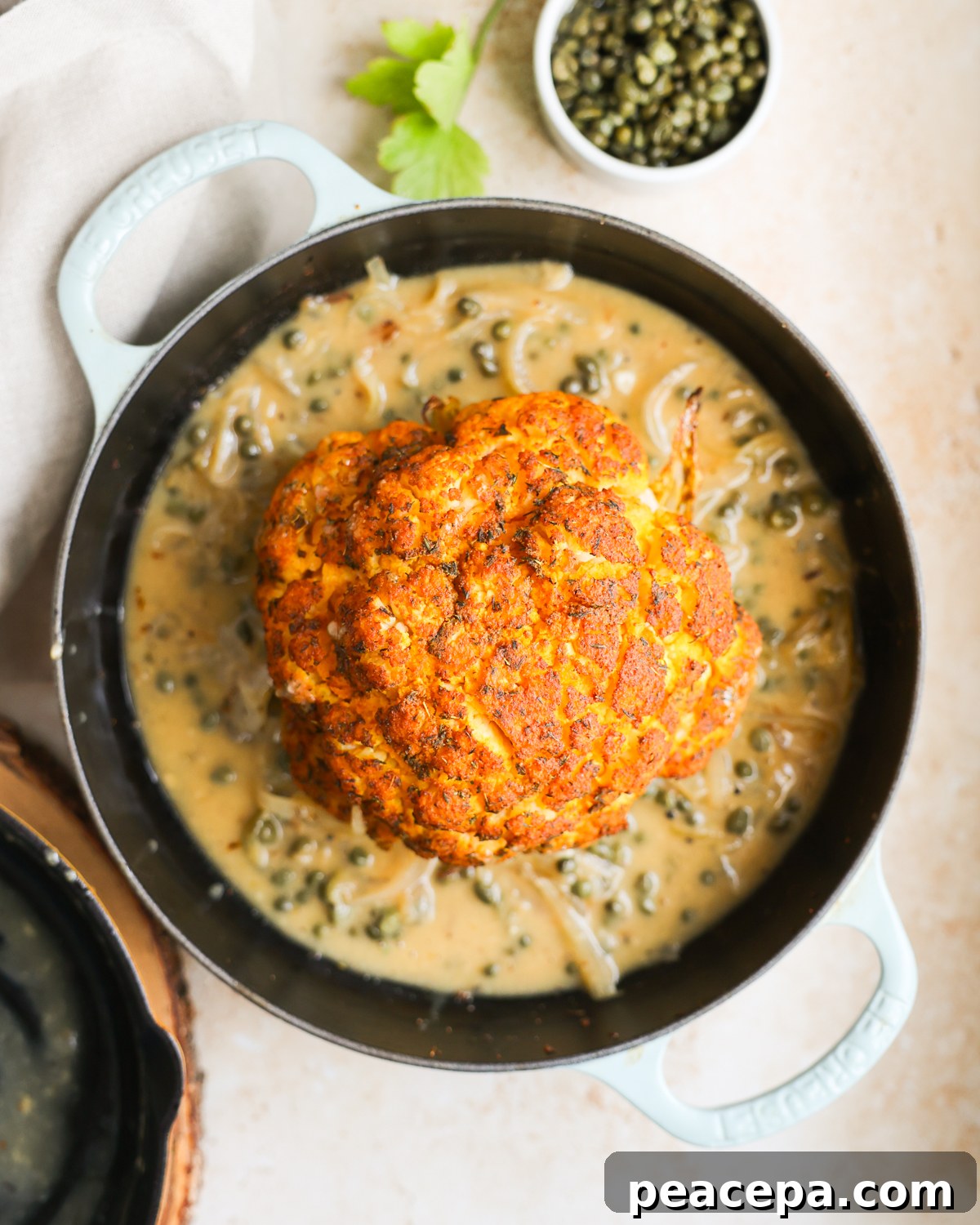
Jenné’s Recipe Tips
- Prepare the head properly: Remove outer leaves, trim the base for stability, and rinse well.
- Par-cook first: Steaming before roasting ensures a tender interior without drying the outside.
- Season thoroughly: Work the spice-oil mixture into all crevices for even flavor.
- Toast the flour: Browning the flour briefly prevents a raw taste and yields a smoother sauce.
- Simmer fully: Allow the sauce to reduce for about 10 minutes to achieve a glossy consistency.
- Adjust to taste: Add more lemon, salt or pepper as needed before serving.
- Slicing: Cut straight down through the core into wedges so each portion holds together.
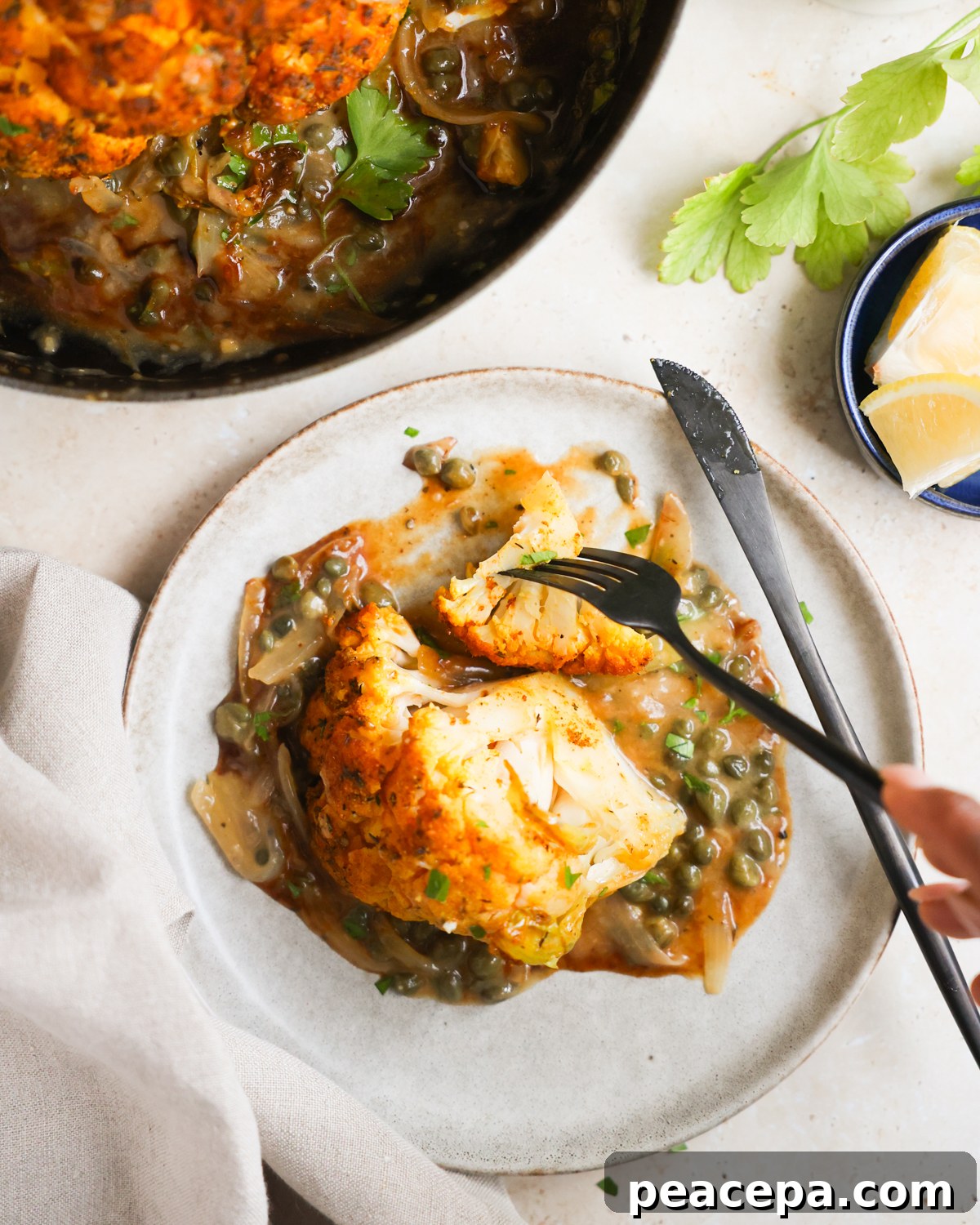
Storage Directions
- Refrigerate: Store leftover cauliflower and sauce separately in airtight containers for up to 3 days. Freezing is not recommended.
- Reheat: Warm the cauliflower in a 350°F oven for 10–12 minutes. Gently reheat the sauce on low heat, adding a splash of broth if it becomes too thick.
Frequently Asked Questions
Yes — replace the wine with an additional cup of vegetable broth and 1–2 tablespoons extra lemon juice for acidity.
The cauliflower is done when a fork or paring knife pierces the center easily and the exterior is golden. If it’s still firm, roast another 5–10 minutes.
You can steam and season the cauliflower up to one day ahead and refrigerate it, then roast just before serving for best texture. The sauce is best fresh but can also be made a day ahead and reheated gently.
More Vegetable Entree Recipes
- Whole Roasted Cabbage “Turkey”
- Butternut Squash Lasagna
- Lentil Meatloaf
- Pan-Fried Oyster Mushrooms
- Oyster Mushroom Scallops
- Za’atar Roasted Cabbage

Whole Roasted Cauliflower Piccata
Video
Ingredients
- 1 medium whole cauliflower, about 2 lb
- 1 1/2 tsp sea salt, plus more to taste
- 1 tsp dried thyme
- 1 tsp smoked paprika
- 1 tsp garlic powder
- 1/4 tsp turmeric powder (optional)
- 3 tbsp extra virgin olive oil
- 1/2 yellow onion, sliced (or 1/2 leek)
- 2 tbsp all-purpose flour (or 1:1 gluten-free flour)
- 1 cup dry white wine (or extra broth)
- 1 cup vegetable stock or broth
- Juice of 1 lemon (about 1/4 cup)
- 1/4 cup capers, drained
- 1 tsp freshly ground black pepper
- 1/4 cup fresh chopped parsley
Instructions
- Remove outer leaves and trim the base so the head sits flat.
- Steam the cauliflower in a steamer basket over boiling water for 10–15 minutes, until easily pierced with a paring knife.
- Remove lid and let cool about 5 minutes. Preheat oven to 375°F.
- Transfer cauliflower to a baking dish or cast-iron skillet.
- Mix salt, thyme, paprika, garlic powder, turmeric and 2 tbsp olive oil. Brush all over the cauliflower.
- Roast for 30 minutes, until golden and fork-tender.
- While roasting, heat remaining 1 tbsp oil in a skillet. Sauté onion with a pinch of salt until softened and beginning to caramelize, about 8 minutes.
- Sprinkle flour over the onions and toast for about 3 minutes until lightly browned.
- Pour in the white wine and deglaze, scraping up browned bits.
- Stir in broth, lemon juice, capers and black pepper. Simmer 10 minutes until thickened and glossy. Remove from heat and season to taste.
- Spoon sauce onto a serving platter, set the roasted cauliflower on top, garnish with parsley and pepper, and serve with lemon wedges.
Notes
- Prepare properly: Trim, rinse, and make sure the cauliflower sits flat before steaming.
- Par-cook first: Steaming ensures an even, tender roast without drying.
- Season generously: Get seasoning into the crevices for consistent flavor.
- Toast the flour: Browning the flour a few minutes eliminates raw taste and improves texture.
- Simmer fully: Allow the sauce to reduce for the full 10 minutes so it thickens well.
- Taste and adjust: Balance lemon, salt and pepper to your preference.
- Slicing: Cut the roasted head into wedges through the core so servings hold together; spoon sauce over each plate.
Storage Directions
- Refrigerate: Store cauliflower and sauce separately in airtight containers for up to 3 days. Freezing is not recommended.
- Reheat: Warm cauliflower in a 350°F oven for 10–12 minutes. Gently reheat sauce over low heat, adding a splash of broth if needed.
Nutrition
Like this recipe? Rate and comment below!